
Where can you find Japanese cultural experiences in Tokyo? Arts, crafts, music, theatre – you can experience all of these even if you don’t speak Japanese.
On my last trip to Japan I searched for local cultural experiences in Tokyo that would be both authentic and tourist-friendly.
As I don’t speak the language, choices were limited, but I did find some great workshops and performances that were accessible and fun.
If you’d like to plan a more meaningful and memorable trip to Tokyo, use my curated list of Japanese cultural experiences to try on your trip to Tokyo.
Table of contents
Try these Japanese cultural experiences in Tokyo
Japanese arts and crafts workshops
I found some excellent Japanese craft workshops in Asakusa, Tokyo’d “old town”. This part of the city has a tradition of artisans. The classes are tourist-friendly with easy instructions in English.
Make your own purse
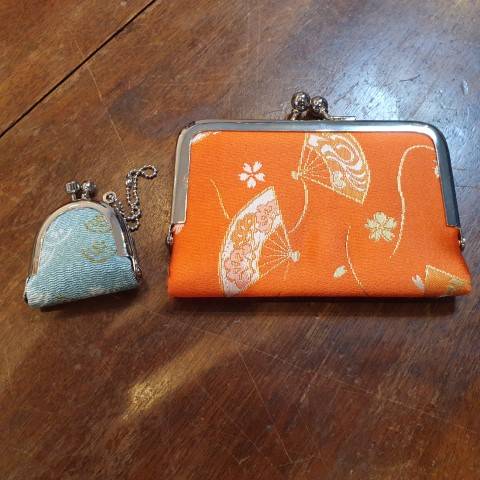
Clasp purses are very popular in Japan. You’ll see them in the shops in every size and colour.
I participated in a craft workshop in Tokyo to make my own purse with a Japanese design.
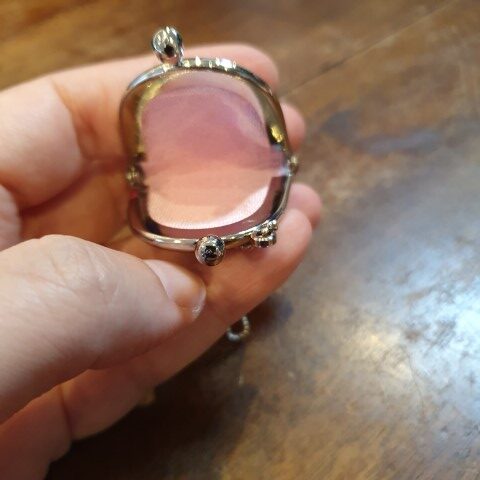
I made a card purse and a tiny purse (which can be used for earrings or something of a similar size). You can also opt to make a case for your glasses.
When you enter the workshop, you get a basket with colourful pieces of fabric, all with Japanese prints. Pick two, one for each purse.
The tutor was very welcoming and gave me step-by-step instructions.
She demonstrated every step and I found it quite easy to follow along, even though I’m not particularly crafty.
I think it’s the kind of workshop that’s designed so that anyone can follow it successfully with no experience.
I was very happy with the results and I’m now using the card purse for all my cards.
The workshop is inside a lovely little shop with pottery and other traditional crafts, so I stayed a bit longer to have a look around.
You can take part in other workshops in the same space, including:
- Postcards made with Ise Katagami paper
- Mizuhiki-style money envelope
- Mizuhiki bookmark
Next time I’m in Tokyo I’ll most likely try one of the other workshops as well.
Japanese calligraphy workshop
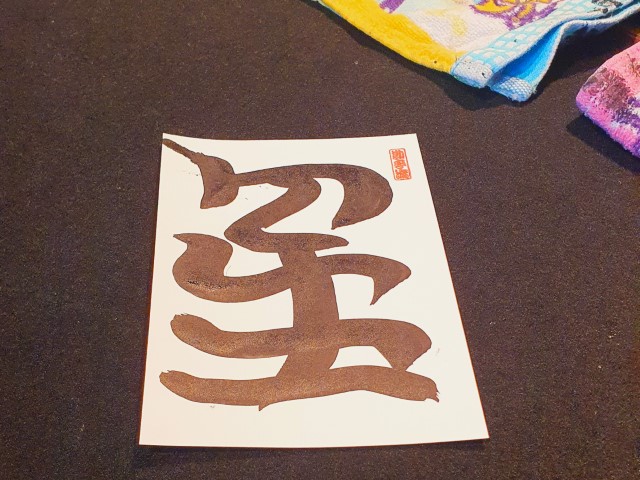
I took a calligraphy class in Korea which was a lot of fun, so when I arrived in Japan I looked for a Japanese calligraphy class and found one easily.
Japanese calligraphy may seem complicated, but I found out it wasn’t too hard.
With some instructions you can copy words or phrases in Japanese and make it look like you’re a native (sort of…).
The instructor provided us with ink and brushes, showed us some words, and let us pick the one we wanted to copy.
Then all we had to do was take our time and copy the lines and dots carefully. The result is beautiful and certainly gives you instant gratification.
The instructor was very kind and was happy to show me how to write an extra word – my nephew’s name. She made a card with his name in Japanese that I took home as a gift.
Kintsugi workshop
What is Kintsugi?
It’s a fascinating concept in Japanese culture that makes you open your mind to new ways of seeing things.
It’s the traditional Japanese art of repairing broken pottery using lacquer mixed with powdered gold, silver, or platinum.
The idea behind it is that instead of hiding the cracks, it embraces the flaws by highlighting them.
The concept of beauty in imperfection has its philosophical roots in wabi-sabi, appreciating the imperfect and transient. It encourages self-acceptance and resilience.
At a Kintsugi workshop in Tokyo you’ll create a very unique souvenir to take home. All the materials are prepared. Follow the instructions and enjoy a calm and contemplative experience of Japanese culture.
Japanese washi paper workshop
If you’re into crafts, you’re probably familiar with the ancient Japanese paper called washi paper.
You can learn how to make it yourself using a pretty easy technique in a washi paper workshop in Tokyo and take home some hand-made postcards as souvenirs.
Washi paper is handcrafted from plant fibres like mulberry bark. It’s thin but surprisingly strong and durable.
It’s interesting to note that UNESCO has recognised washi paper as an Intangible Cultural Heritage of Humanity.
Traditional Japanese music and theatre in Tokyo
I took the opportunity to get to know some traditional music and theatre while in Tokyo.
Here are some Japanese performances and workshops you can experience.
Japanese music concert
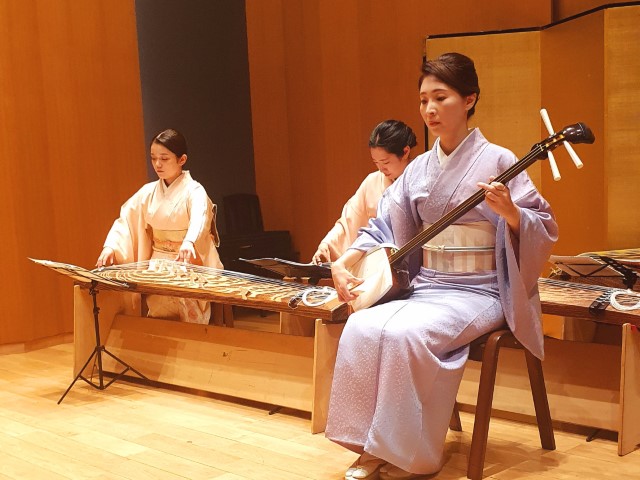
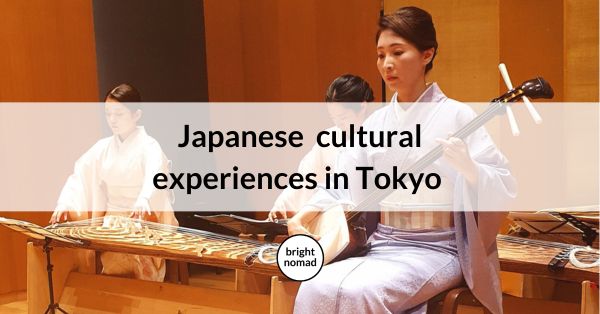
One of the best Japanese cultural experiences I had was a music concert played with traditional Japanese instruments.
The instruments included bamboo flutes, Japanese drums, and the koto – a string instrument I also got to play myself at a koto workshop in Kyoto.
What I loved about this concert was that every aspect of the performance was explained in English: the music pieces, the instruments, and the history.
It’s an educational concert that was highly entertaining and it made Japanese music very accessible. We got a special insight into Japanese culture.
Kabuki theatre in Tokyo
Kabuki is traditional Japanese theatre, combining drama, dance, and music.
Its over-the-top costumes, make-up, and wigs make it quite a spectacle.
Kabuki has been recognised by UNESCO as an Intangible Cultural Heritage.
Seeing Kabuki theatre in Tokyo is a unique Japanese cultural experience, but I wouldn’t say that Kabuki is particularly tourist-friendly.
However, I did find that there were specific shows with subtitles in English at the Kabukiza Theatre. That’s the main Kabuki theatre in Tokyo, located in Ginza.
My tips for seeing Kabuki theatre in Tokyo:
- There are matinees and evening shows to choose from.
- You can also choose between a full show and a single act. Single acts are easier to fit into your Tokyo itinerary, because a full show can last up to four hours.
- Try to read a synopses before the show, to make it easier to follow.
- Events in Japan start on time, so be there early enough to take your seat.
Japanese drumming in Tokyo
Japanese drumming, called Taiko, is very theatrical, and full of energy.
I participated in a couple of Taiko workshops and it definitely takes years to master the skills, but it’s great fun to try it out while you’re in Tokyo.
You can experience it by taking a Japanese drum workshop in Tokyo with easy, step-by-step instructions.
Why I loved trying out Japanese cultural experiences
I spent a lot of time wandering around museums in Tokyo but I also wanted to try out some other experiences. They made my trip more meaningful and definitely unforgettable.
Hands-on crafty workshops where I made my own Toyko souvenirs were far more satisfying than buying ready-made ones from a shop.
Seeing live shows of traditional Japanese arts was more enjoyable than wandering the crowded touristy streets.
You can add some of these brilliant cultural experiences to your Tokyo itinerary for as a way to learn something new, self expression, and just pure fun.
Have you tried these or any other Japanese cultural experiences in Tokyo? Feel free to share what you think in the comments.
Browse more Japan guides
- Japanese woodblock art
- Ueno Park self-guided tour
- Free tours in Tokyo
- Naoshima art island
- Cultural experiences in Kyoto
- Tokyo design guide
- Takamatsu travel guide
- Top travel tips for Tokyo
Save this guide to Japanese cultural experiences in Tokyo on Pinterest for your next trip to Japan
6 Comments
What a fantastic list of experiences to try. If you had to pick one craft to do, which would be your recommendation?
The purse workshop would be my first recommendation for a crafty experience in Tokyo 🙂
Hello! Tokyo is one of my dream destination, but it’s so far away. I think it’s a great cultural experience and a possibility to learn so many new things!
So many great experiences here! I’m always interested in learning about other cultures, so I’d love to try all of these. Thanks for the wonderful recommendations — saving this for my Tokyo trip.
I love Japan and Japanese culture. Great guide to experience first hand the techniques and skill needed to create your own traditional Japanese creations and writing.
Looks like such a fascinating list of experiences — I’d love to try something like this one day. The workshops sound so hands-on and meaningful, and the calligraphy and Kintsugi classes especially caught my eye. What a beautiful way to connect with Tokyo’s culture beyond the usual sightseeing.