
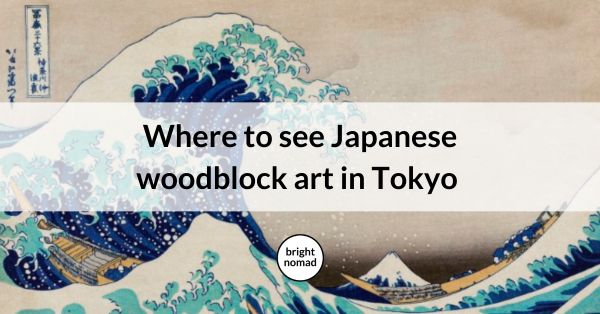
Where are the best places in Tokyo to see the traditional Japanese woodblock art, ukiyo-e?
Ukiyo-e, is a Japanese art form that was popular in Japan in the Edo period, and is still celebrated today in museums and galleries in Japan and worldwide.
Even if you’ve never heard the name before, you’re probably familiar with the iconic Japanese picture of the Wave. It’s a great example of the style.
What I love best about ukiyo-e pictures is that they’re so wonderfully detailed and colourful. It makes them look both sophisticated and naive at the same time.
In this guide I’ll share the places in Tokyo I found on my last trip to Japan that feature ukiyo-e, plus things to do nearby and tips on where to buy Japanese art in Tokyo.
To see more great art in Tokyo, check out my guide to museums in Tokyo.
This article is also featured on GPSmyCity. To download this article for offline reading or create a self-guided walking tour to visit the attractions highlighted in this article, go to Walking Tours and Articles in Tokyo.
Table of contents
Best museums for ukiyo-e in Tokyo
Given its popularity, I expected to see Japanese woodblock art everywhere in Tokyo, but was a little surprised to find that there are only some specific places where you can view it on a regular basis.
Ōta Memorial Museum of Art: Tokyo woodblock print museum
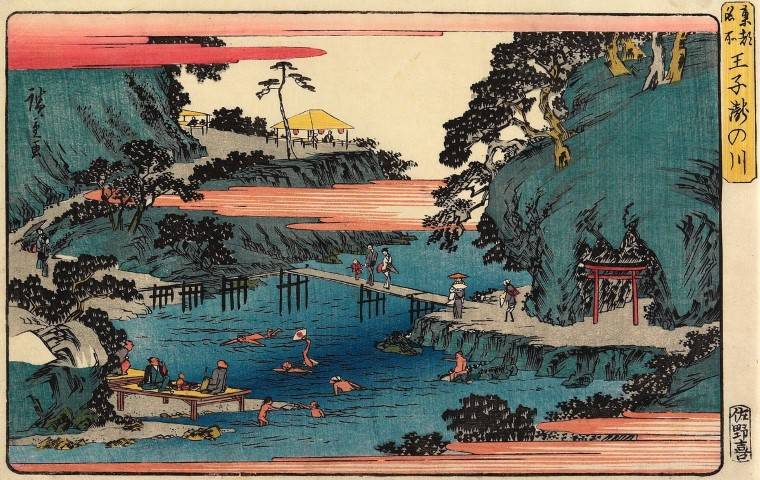
Ōta Memorial Museum is entire museum dedicated to the Japanese art of ukiyo-e.
It’s definitely worth a visit for fans of Japanese art.
It has a collection of about 12,000 ukiyo-e prints, with only a small selection of those on display.
The exhibition changes every month, so every time you go you’ll see different prints. The museum curates exhibitions revolving around specific artists or Japanese cultural themes, such as Japanese food or Kabuki theatre.
The exhibition I saw was about the work of Utagawa Hiroshige, and specifically his use of l deep blues in landscape paintings.
I was there on an afternoon on a weekday and the place was quite busy. I didn’t have to queue to get in, but inside I sometimes had to wait to see some of the pieces.
You can easily spend about an hour viewing the exhibition.
The display is well-organised and the museum isn’t too big, so it’s very easy to follow the exhibition. There were some texts in English.
The museum’s exhibitions are based on a comprehensive private collection of the late Seizō OtaⅤ, who was an avid ukiyo-e collector.
Unfortunately, they don’t allow photography inside the museum (which is not unusual in Tokyo museums).
There’s a small gift shop by the ticket desk (I couldn’t help but buy some postcards to take home). There’s also another gift shop downstairs with some traditional Japanese crafts.
You can get tickets at the ticket desk, no need to book ahead, but do check the opening times in advance on the museum’s website, because the museum is closed a few days a month when the exhibition changes.
Things to do near Ōta Memorial Museum
The location is central and very close to Harajuku Station, so you can fit it into your itinerary when you’re in the area.
Harajuku is famous for Takeshita Street, a super touristy and pretty crowded street, featuring the latest and most extreme Japanese youth culture fashion. I think it’s a must-see at least once just because it’s so unusual.
It’s also close to upscale shopping street Omotesando and to Meiji Shrine, both worth a visit.
I found a traditional Japanese music concert across the street from Ōta Memorial Museum. I went to see both, so I had an immersive Japanese culture experience that day.
The music was wonderful and the concert was tourist-friendly, with explanations in English about the music and the instruments.
Address: Ōta Memorial Museum of Art, 1-chōme-10-10 Jingūmae, Shibuya, Tokyo 150-0001, Japan
Tokyo National Museum
Tokyo National Museum is an art and archaeology museum with a massive collection of national treasures.
It’s a large museum complex that you can spend quite a bit of time in and see many different styles of Asian arts and crafts.
The Japanese woodblock prints are in the main building, the Japanese Gallery (Honkan), in room 10 on the second floor.
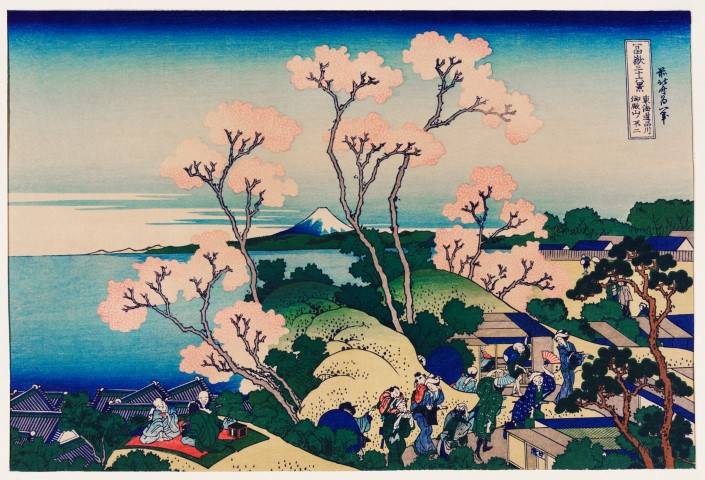
The museum’s collection includes works by famous ukiyo-e artists, such as Hokusai, Hiroshige, Utamaro, Kuniyoshi, and Sharaku .
Things to do near Tokyo National Museum
The location is in northern Tokyo inside the lovely Ueno Park, a wonderful cultural hub.
Other museums in Ueno include the Tokyo Metropolitan Art Museum, the The National Museum of Western Art by Le Corbusier, and the National Museum of Nature and Science.
If you happen to walk around Ueno Park after dark, pay attention to the painted lanterns featuring ukiyo-e illustrations.
You can easily spend an entire day just in Ueno.
You can also spend half a day in Ueno and combine it with a visit to the nearby neighbourhood of Asakusa, which is well worth a visit. I recommend you take a free walking tour there to see the highlights.
Address: Ueno Park 13-9, Taito-ku, Tokyo
Sumida Hokusai Museum

The Sumida Hokusai Museum is dedicated to the work of artist Katsushika Hokusai.
He created The Great Wave, probably the most famous artwork in the ukiyo-e style. The full name of the piece, by the way, is The Great Wave off Kanagawa and Red Fuji.
The museum is in Sumida, the district where Hokusai was born and lived, which is also known for Sumo culture.
I stayed not too far from there and passed by the museum building quite a few times before realising it was a museum at all! The building is just spectacular. It’s reflective, which looks amazing when the sun is shining, and a peculiar geometric shape with angular cuts.
Inside there are several floors with permanent and temporary exhibitions. I recommend you get a combined ticket to see both.
You can buy a ticket at the desk on the ground floor, no need to book ahead.
The gift shop is also on the ground floor and, at least when I was there, seemed just as busy as the exhibition rooms upstairs.
The “Discover Hokusai” exhibition gives you a chronological introduction to Hokusai’s life and takes you through different stages in his artistic development.
You can also see a model of Hokusai’s art studio in Sumida.
The temporary exhibitions are themed and change every few months.
I felt it was well-curated and gave me a great overview of Hokusai’s career.
Address: 2 Chome-7-2 Kamezawa, Sumida City, Tokyo 130-0014, Japan
Edo Tokyo Museum
A short walk from Sumida Hokusai Museum, you’ll find the Edo Tokyo Museum.
As the museum covers the Edo period in Tokyo, the time when ukiyo-e was flourishing, it has held many ukiyo-e exhibitions. Check what’s on to see if they have any ukiyoe shows when you visit.
Address: 1 Chome-4-1 Yokoami, Sumida City, Tokyo 130-0015, Japan
More places to find and buy ukiyo-e woodblock art in Tokyo
Toshusai
Walking around Jimbucho, Tokyo’s bookshop district, I came across many small shops and galleries selling prints of Japanese art.
I especially liked Toshusai, a ukiyo-e gallery specialising in woodblock prints with a huge catalogue of prints for sale.
If you’re looking to buy buy ukiyo-e in Tokyo, this is a good place to find prints.
Address: San Bldg. 1F 1-6 Jinbocho Kanda Chiyoda-ku Tokyo Japan 101-0051
Suntory Museum of Art
Suntory Museum of Art is a super elegant museum in Roppongi inside Tokyo Midtown upscale shopping centre.
It has changing temporary exhibitions, some of which feature ukiyo-e woodblock prints and paintings.
Address: 3F Tokyo Midtown Galleria, 9-7-4 Akasaka, Minato City, Tokyo
Sakai Kokodo Ukiyo-e Gallery
Located in Asakusa, this gallery-shop specialises in high-quality ukiyo-e art, both originals and reprints. A great place to buy Japanese art in Tokyo.
It has artworks from the Sakai family collection, one of Japan’s largest private art collections.
Address: 1 Chome-20-1 Asakusa, Taito City, Tokyo 111-0032, Japan
Tokyo Artbeat
Tokyo Artbeat is a great resource for art listings in Tokyo that I used quite a bit during my time there. It has an English version and it helps you find all the latest exhibition news easily.
What’s ukiyo-e? A brief history of Japanese woodblock art
Ukiyo-e emerged from the 17th century to the 19th century, during Japan’s Edo period, a time of peace and prosperity.
They were a trendy part of an evolving urban culture.
The art depicted the pleasures of urban life, with themes such as kabuki actors, serene landscapes, sumo wrestlers, travel destinations, and Japanese folklore.
Many ukiyo-e artworks simply captured everyday life, with an element of storytelling.
The name ukiyo-e is often translated as “pictures of the floating world.”
Initially, artists painted ukiyo-e by hand, but later on they started carving images into woodblocks.
This way, they could print ukiyo–e on a larger scale, making these artworks more affordable and widely accessible.
Ukiyo-e artworks are characterised by their bold outlines, vivid colours, flat areas of colour, and meticulous attention to detail.
The themes, the vibrant style, and their affordability made ukiyo-e prints immensely popular in Japan.
They soon gained popularity in the West as well. Ukiyo-e influenced Western Impressionist artists like Van Gogh and Monet during the late 19th century’s Japonisme movement.
Famous ukiyo-e artists and artworks
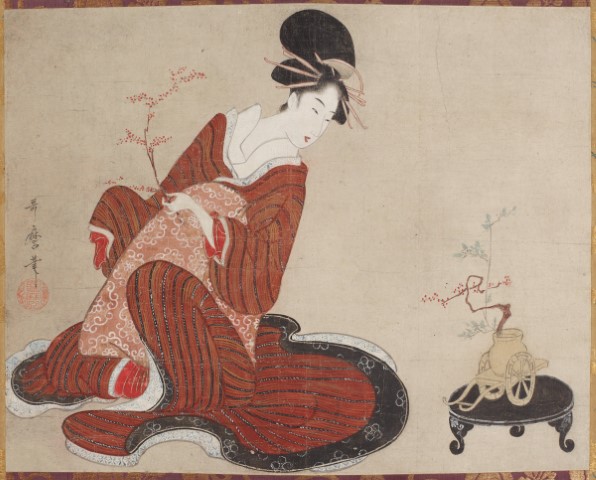
Hishikawa Moronobu was one of the founders of ukiyo-e with works like Beauty Looking Back.
Kitagawa Utamaro created intimate portraits of women, such as The Courtesan Ichikawa.
Katsushika Hokusai is the mastermind behind The Great Wave off Kanagawa, one of the most recognised artworks worldwide.
Utagawa Hiroshige was known for his poetic landscapes like The Plum Garden at Kameido Shrine.
Some of the most famous landscape paintings in the ukiyo-e style are Katsushika Hokusai’s Thirty-Six Views of Mount Fuji (including the iconic The Great Wave off Kanagawa) and Utagawa Hiroshige’s The Fifty-Three Stations of the Tōkaidō series.
Learn more about Japanese woodblock art (Tokyo ukiyoe)
Browse more Japan guides
- Tokyo cultural experiences
- Japanese craft workshops
- Naoshima art island
- Unique attractions in Kyoto
- Free waking tours in Tokyo
- Tokyo design guide
- Visiting Takamatsu
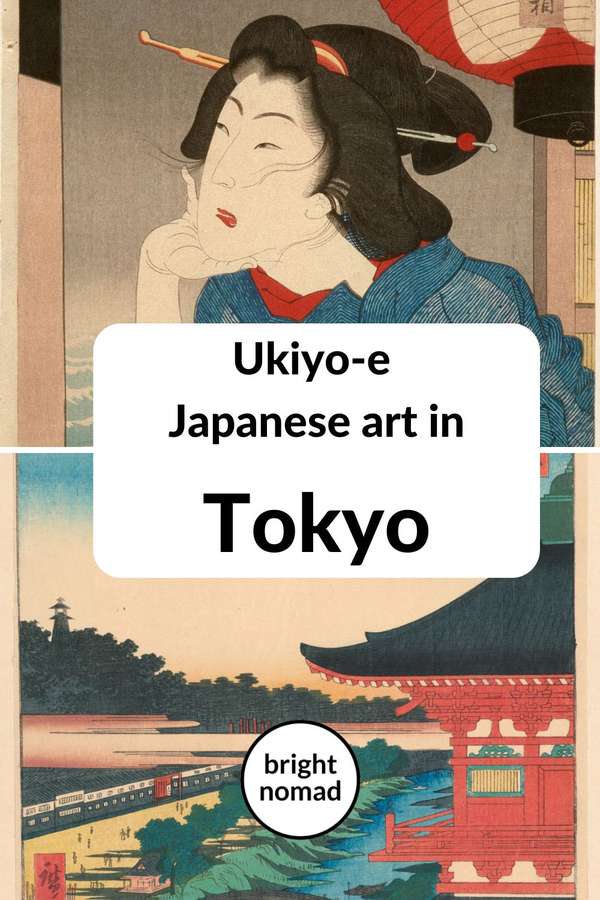
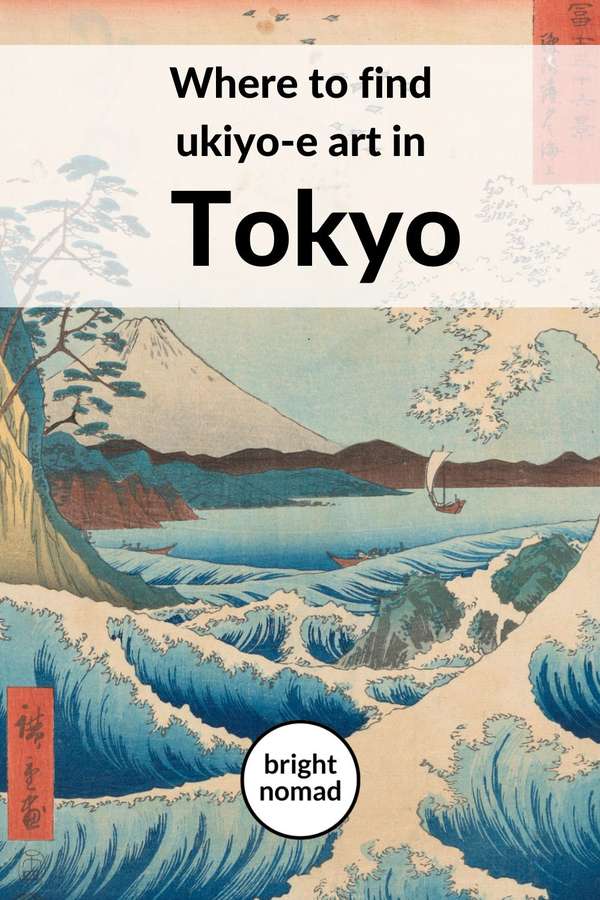
Save this guide to Japanese woodblock art in Tokyo on Pinterest

8 Comments
The Japanese woodblock art is beautiful. Great to read about so many places to see large collections. While we rarely buy such things as souvenirs we love to admire local artistic treats like this. Great to learn more about the history too.
I’m such a huge art lover, so this guide is a real find! Tokyo is right at the top of my bucket list, and I’ll definitely be adding all of these spots to my itinerary. Thanks for sharing!
I’ve visited Japan, but somehow I haven’t yet explored its ukiyo-e art. This has certainly given me another reason to return to Tokyo , particularly the opportunity to see these beautiful woodblock prints and learn more about the artists and the history behind them.
Such an interesting guide! I’ve always found Japanese woodblock art fascinating, especially the incredible detail and colors. The Sumida Hokusai Museum would be high on my list when visiting Tokyo—such a great way to learn more about this unique part of Japanese culture.
I’m not big on art but seeing this traditional type of Japanese art sounds very interesting.
What a wonderfully detailed and visually rich guide! I love Ukiyo‑e. The list of specific museums in Tokyo (especially the Ōta Memorial Museum of Art and the Sumida Hokusai Museum) is super useful for planning.
This is such an interesting guide! I’m not super deep into the Japanese woodblock world, but I’d still love to visit some of these spots when I finally make it to Tokyo. The Ōta Memorial Museum of Art and the Sumida Hokusai Museum look especially worth a stop — the colors and detail in ukiyo-e are so beautiful. I’d love to see those masterpieces up close. Saving this for future travels!
Fascinating! The art is beautiful