
What are the best craft workshops in Asakusa, Tokyo? Find out why this district of Tokyo is a wonderful centre for Japanese crafts and what classes you can take.
Asakusa is a traditional district in Tokyo where I found many different craft classes.
When I looked into it, I found that Asakusa didn’t just become a craft hub recently, it’s been one for centuries.
Some traditional Japanese crafts are quite unique to the area. Even though I’m not particularly crafty, I enjoyed the experience and left with some original souvenirs.
To experience Tokyo in a new way, follow my guide to discover the great Japanese craft workshops in Asakusa.
Get an offline map of this Asakusa guide
This article is also featured on GPSmyCity. To download this article for offline reading or create a self-guided walking tour to visit the attractions highlighted in this article, go to Walking Tours and Articles in Tokyo.
Table of contents
Craft workshops in Asakusa: my top picks
I put together a small selection of the most unique Japanese crafts to experience in Asakusa.
All of these workshops let you make and take home beautiful souvenirs.
The instructors are trained at giving easy, step by step instructions, so even if you have little or no experience, you can be sure that the result is going to look good.
Kintsugi workshop
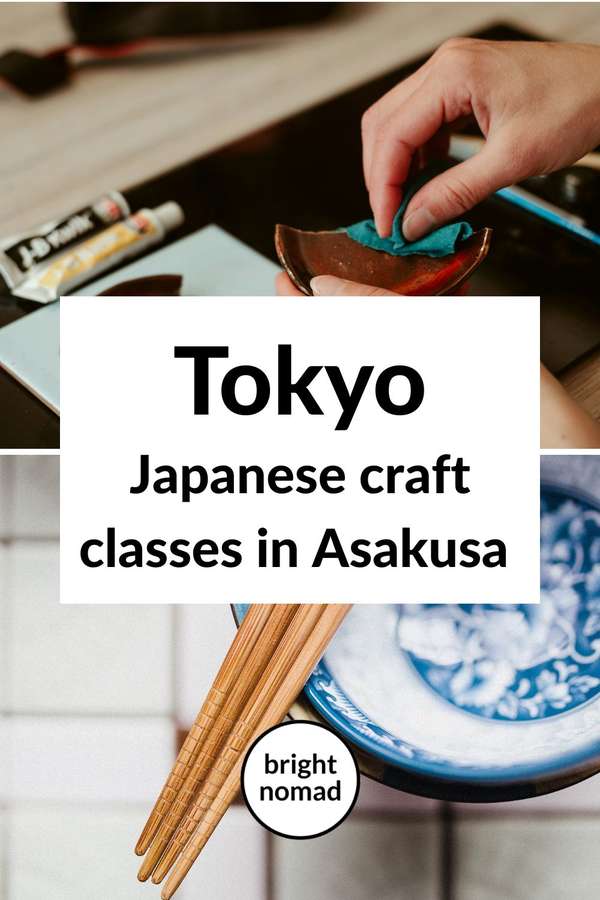
Kintsugi is the Japanese art of repairing broken pottery with gold.
Instead of hiding the cracks, the gold turns something damaged into something beautiful.
The philosophy behind simply says that something broken isn’t ruined, it’s just changed. The fractures become part of the object’s history.
This metaphor for resilience, the idea that the things that hurt us don’t have to destroy us, was quite thought-provoking for me when I first heard about it.
At a Kintsugi workshop, you receive all the materials needed, learn each step of the process, and take the ceramic home as a Japanese souvenir. No experience needed.
Knife sharpening
In Japan sharpening knives is considered an art form in its own right.
Professional knife sharpeners in Japan train for years with precise methods.
Japan has one of the most sophisticated knife and blade cultures in the world.
It flows naturally from the samurai sword tradition. Kitchen knives are made with attention to edge geometry, steel quality, and technique.
It reflects the Japanese appreciation for disciplined care and refinement.
If you’d like to experience this yourself, join a knife sharpening workshop to learn the process with patient instructions.
Bamboo workshop
Bamboo craft is deeply embedded in Japanese tradition. It’s one of the oldest and most versatile materials in the culture.
It’s part of the humble and natural Japanese aesthetic.
Chopstick-making (hashimonozukuri) is a recognised craft, which produces beautifully lacquered chopsticks.
There’s a broader bamboo craft tradition (take-zaiku) covering baskets, furniture, and architectural elements, which has its own regional schools and master craftspeople.
At a bamboo workshop you’ll be making handmade tableware from bamboo that you can take home. No experience needed (children can join too) and all materials and step-by-step instructions are provided.
Handmade Japanese paper workshop
Washi paper is one of the most celebrated Japanese crafts. It was recognised by UNESCO as an intangible cultural heritage.
The paper is both delicate and durable. It’s made from the fibres of plants using an ancient, traditional process.
Washi has been used historically in many ways: bookbinding, lanterns, umbrellas, and even in architecture (shoji screens).
At a washi paper workshop you’ll learn the entire process of making it. It’s not difficult to make and the result is just beautiful. You can choose between plain and coloured paper, and I’d recommend the coloured paper.
The history of Asakusa as a craft hub
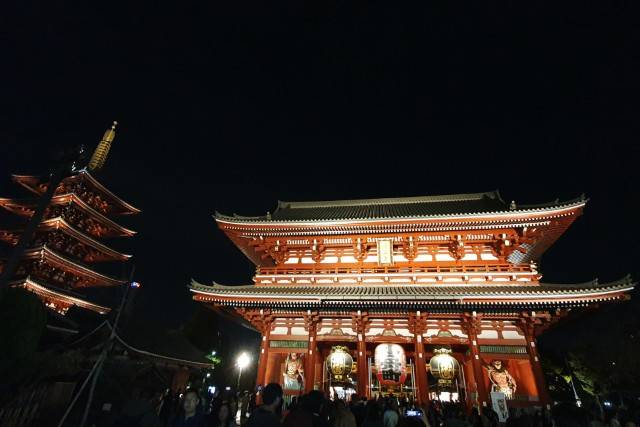
In the Edo period, when Senso-ji Temple was established as the spiritual heart of Asakusa, it transformed the whole area into a lively temple town.
It attracted pilgrims, merchants, and entertainers.
The steady flow of visitors created demand for handmade goods, from paper lanterns and fans to woodblock prints and textiles.
Demand for skilled labour grew and craftspeople and artisans started moving to Asakusa.
Later on, Asakusa became a lively cultural district where artisans, performers, and traders mixed, with many small workshops.
Traditional crafts flourished. Skills passed down through generations of families who never left the district.
Even as Tokyo modernised, Asakusa retained its artisanal identity and preserved traditional techniques.
When you visit Asakusa, you can easily take a craft workshop and combine it with visits to Senso-ji Temple, Nakamise Street, and other nearby attractions.
I recommend you also visit the the Edo Taito Traditional Crafts Centre in Asakusa. It exhibits many different types of traditional crafts over two floors.
Where to stay in Asakusa
More things to see in Asakusa
Here are the other popular things to see in Asakusa, all within easy walking distance of each other:
Senso-ji Temple: Tokyo’s oldest and most visited temple with a five-storey pagoda.
Kaminarimon Gate: The iconic “Thunder Gate” with its enormous red lantern and crowds of tourists taking photos of it (as I did and you will most likely do too…)
Nakamise Shopping Street: The 250-metre covered lane that connects the gate to the temple is one of Japan’s oldest shopping streets, dating back to the Edo period.
Asakusa Culture Tourist Centre Observation Terrace: I enjoyed climbing up to the 8th floor for this rooftop terrace. You can see the streets from above, and both Senso-ji and the Tokyo Skytree together.
Free walking tour in Asakusa: I took a free walking tour to get to know this part of Tokyo with a guide. It was a great introduction to the history of Asakusa and to the most important places to see in just a couple of hours.
Ueno Park is fairly close to Asakusa. Follow my self-guided walk in Ueno Park to see all the highlights.
Browse more Japan guides
- The best museums in Tokyo
- Top destinations in Japan
- Tokyo for design lovers
- Free tours in Tokyo
- Cultural experiences in Tokyo
Save this guide to Japanese craft workshops in Asakusa, Tokyo on Pinterest
4 Comments
Interesting information. We enjoyed hands-on experiences in Tokyo.
the concept of Kintsugi is definitely winning for me. in fact i literally just watched a Netflix series and it came up – definitely gonna take it as some kind of sign…
This is such a unique way to experience Tokyo! I love the idea of taking a hands-on workshop and bringing home something you made yourself. The kintsugi concept is especially beautiful and meaningful. Asakusa sounds like the perfect place to slow down and connect with Japanese culture. Definitely adding this to my list for my trip to Tokyo!
I’d be very interested in taking the Kintsugi class in particular when in Tokyo!