
Take this Ueno Park self-guided walk to see all the highlights and beautiful gems.
Ueno Park is a wonderful area in Tokyo, especially for anyone who loves art, history, and architecture.
It has museums, major shrines, Buddhist temples, and a lotus pond, all within easy walking distance of each other in a lovely green park.
I spent quite a bit of time strolling around Ueno Park, visiting the museums, and enjoying the calm atmosphere.
It’s the perfect mix of urban nature, art, and tranquillity in the big city.
You can spend an entire day at Ueno Park if you enter the museums, or about half a day if you visit fewer museums and stroll around between the temples and shrines.
It’s easy to get overwhelmed by all the great things to do in Ueno Park. I created this Ueno Park self-guided walk that takes you to all the main highlights.
Get an offline map of this Ueno Park self-guided walk
This article is also featured on GPSmyCity. To download this article for offline reading or create a self-guided walking tour to visit the attractions highlighted in this article, go to Walking Tours and Articles in Tokyo.
Table of contents
The Ueno Park self-guided walk
Exit Keisei Ueno Station and walk into the park through its south entrance. The station next to it, JR Ueno Station, is also very close, but access from Keisei Ueno Station is easier for this tour.
Beautiful shrines and temples
Shinobazu Pond and Bentendo Temple
- 5 minutes from the station
- Free entry
As you come through Ueno Park’s south entrance, turn left and walk towards the water.
Shinobazu Pond stretches out below you with its lotus pond, a boat pond where you can hire swan pedalos, and a cormorant and duck pond at the far end.
In summer, the lotus pond is the main draw with giant pads and pink flowers, especially in the early morning.
At other times of year the pond is quieter but still lovely.
I liked the tranquillity and the reflections of the trees on the water. It was easy to forget the city noise, just a few minutes after entering the park.
You’ll see a small island in the pond with a reconstruction of a 17th-century Buddhist temple.
Bentendo Temple is an octagonal Buddhist temple dedicated to Benzaiten, the goddess of everything that flows: water, music, time, fortune. People come here to pray for good luck.
Gojo Ten and Hanazono Inari Shrines
- 5 min walk from the pond
- Free entry
Follow the path north along the edge of the pond and you’ll reach two very old shrines sitting side by side in a corner of the park.
Gojo Ten is dedicated to the deity of medicine and healing, and the god of scholarship and learning.
Hanazono Inari is a fox shrine with a photogenic tunnel of red torii gates leading up to the main hall through the trees.
I thought these might be hidden gems, as they’re quite small and there weren’t many people there when I visited, and I couldn’t see any information in English or souvenirs.
Then I saw they had over 2000 reviews on Google Maps, so probably not so hidden after all, but it certainly felt very quiet there.
Kiyomizu Kannon-do Temple
- 5 min walk from Gojo Ten
- Free entry
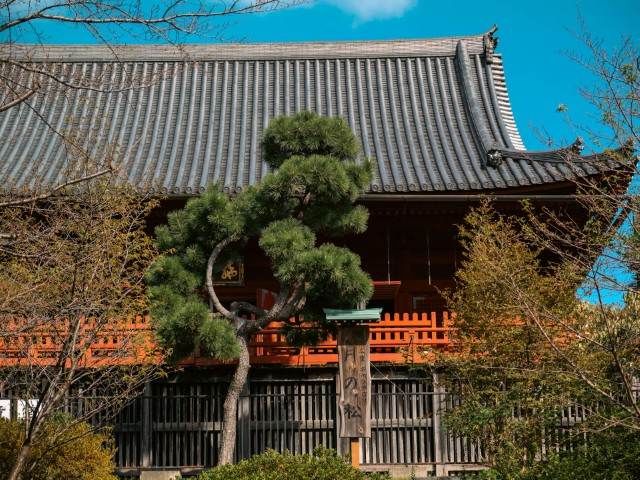
From Gojo Ten, walk back and climb up till you find one of Tokyo’s oldest surviving structures: Kiyomizu Kannon-do Temple, which dates back to 1632.
Many visitors come there to see the Moon Pine Tree. This is an oddity, a carefully trained Japanese black pine whose branches have been bent into a perfect circle.
If you like ukiyo-e (Japanese woodblock art), it’s interesting to note that this tree was depicted in a print by Hiroshige in 1857.
Other than the tree, I enjoyed looking at the decorations inside and outside the temple.
If you collect goshuin stamps in a notebook, this temple offers one.
3 unique museums in Ueno Park
The next part of this self-guided Ueno walk takes you to some of the museums in Ueno Park.
The timing of the rest of this self-guided walk depends on how much time you spend at each museum.
You won’t be able to see all the museums in one day of course, but you can always come back to Ueno for more museum visits.
Ueno Royal Museum
- 2 minutes from Kiyomizu
- Check opening times and admission fees
The Ueno Royal Museum is a small art space with no permanent exhibition, so you want to check what the current exhibition is before visiting. The museum is closed between shows.
Past exhibitions have ranged from retrospectives of the ukiyo-e masters to shows dedicated to popular manga artists.
The admission fee varies by exhibition.
National Museum of Western Art
- 5 min walk from the Ueno Royal Museum
- Check opening times and admission fees
As an architecture buff, this building made me stop and stare for a bit. It was designed by Le Corbusier and was listed as a UNESCO World Heritage Site, recognised as a landmark of the modern movement.
In front of the museum, before entering, you’ll see some famous sculptures by Rodin, like The Thinker.
This is not where I expected to find Rodin. I later learnt that this was Japan’s only museum dedicated exclusively to Western art.
The permanent collection runs from the late medieval period through to the early twentieth century, and features works by Monet, Renoir, Manet, Cézanne, Picasso, El Greco, Rubens, and Tintoretto.
Special exhibitions rotate throughout the year.
Allow at least an hour for the permanent collection, and more if there’s a special exhibition that interests you.
I loved the museum gift shop, especially the selection of art books.
National Museum of Nature and Science
- 2 min walk from The National Museum of Western Art
- Check opening times and admission fees
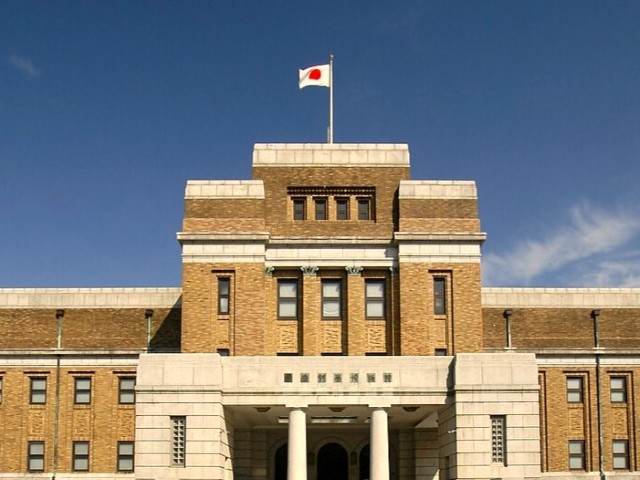
This large Art Deco building is home to a natural history and science museum in the grand Victorian tradition.
Expect to see fossils, full dinosaur skeletons, meteorites, stuffed specimens of animals from around the world, and an immersive 360-degree theatre.
The building complex contains two main exhibition wings: one covering the natural and scientific history of Japan, and a larger global wing covering the history of life on Earth from the very beginning.
I found the Japanese wing particularly interesting.
Allow about 90 minutes just to see the highlights. A more comprehensive visit can take a few hours.
Famous museums in Ueno Park and an old shrine
Ueno park is packed with museums. In the next part of this self-guided tour we’ll visit more excellent art and culture museums.
Tokyo National Museum

- 2 min walk from the National Museum of Nature and Science
- Check opening times and admission fees
This is one of the biggest highlights in Ueno Park and one of the top museums in Tokyo.
It’s Japan’s oldest museum, founded in 1872, and still its largest.
I learnt a lot about Japanese history and especially its arts and crafts at this museum.
The main building, the Honkan has a large series of displays tracing the history of Japanese art from prehistoric pottery through to the Edo period: lacquerwork, Buddhist sculpture, samurai armour and swords, screens and scrolls, textiles, ceramics. The collection is extensive and includes many Japanese National Treasures.
The Toyokan, a separate building to the right of the main entrance, covers the art of Asia beyond Japan: China, Korea, Southeast Asia, Central Asia, India, and Egypt. It is frequently less crowded.
The Heiseikan, the building directly behind the Honkan, houses the archaeology galleries.
It takes plenty of time to see this museum. If you want a proper visit, allow 2-3 hours at least. If you’re short on time in Tokyo, allow at least 90 minutes to see the main highlights that interest you.
Tokyo Metropolitan Art Museum
- 6 min walk from the Tokyo National Museum
- Check opening times and admission fees
Tokyo Metropolitan Art Museum runs a steady programme of special exhibitions, by both Japanese and international artists.
Special exhibitions change frequently and some require advance tickets.
The museum also has a gallery on the lower level, which shows rotating open-call exhibitions by up-and-coming Japanese artists. It’s free and worth a visit, I enjoyed seeing those fresh artworks.
The building itself was designed by a student of Le Corbusier and has some familiar elements, like the use of concrete and natural light.
Ueno Tōshō-gū Shrine
- 2 min from the Tokyo Metropolitan Art Museum
- Check opening times and admission fees
By this point in the day you’ll have been inside a lot of buildings.
Ueno Toshogu is a good reason to come back outside.
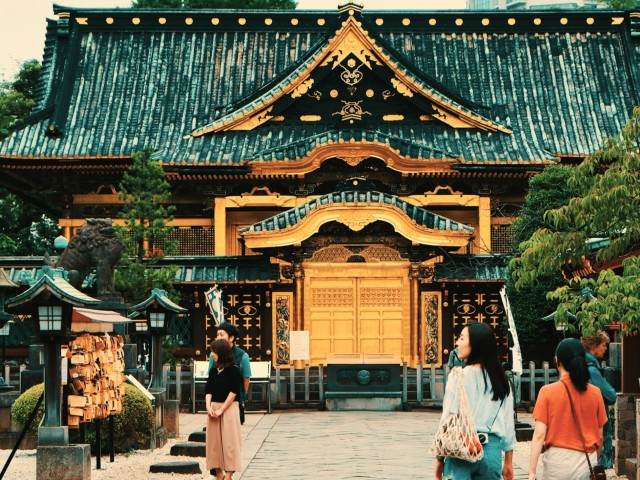
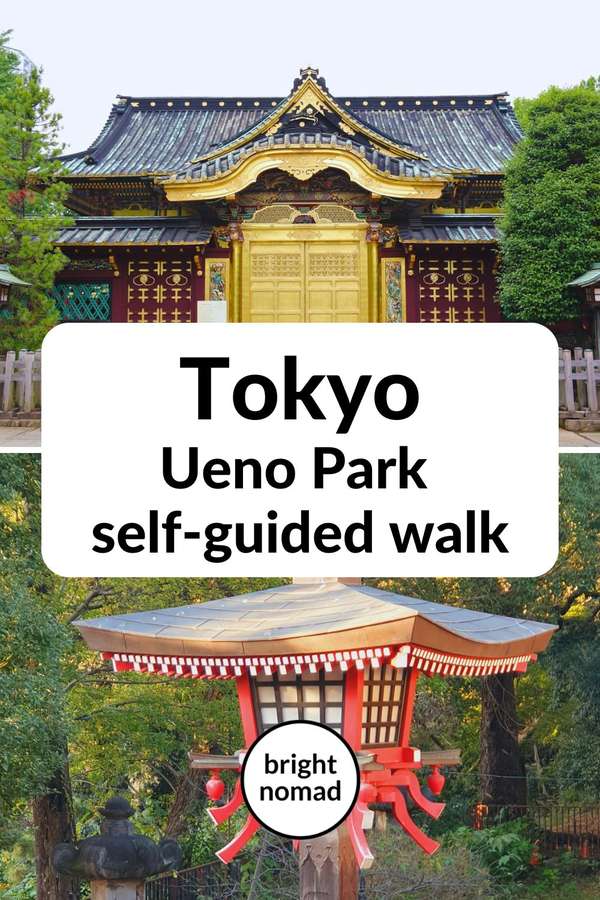
Follow the main promenade until you reach the ancient Ueno Toshogu Shrine.
The outer grounds are free to enter and worth wandering through.
There’s a fee to enter the inner precinct, from which you can see the main hall.
It’s genuinely beautiful, covered in gold leaf and lacquer with intricate carved panels.
Allow about 15 minutes to appreciate the carvings.
Just beyond the shrine’s outer gate stands the five-storey pagoda, one of the oldest structures in the park and one of the most photographed.
Ueno Park guided tours
- Ueno Park and Ameyoko History and Street Food Tour
- Tokyo National Museum and Ueno Park Private guided tour
- Private Ueno Highlights and Local Gem Walking Tour
More things to do near Ueno Park
Browse Ameyoko Market
When you leave Ueno Park, step out through the park’s south gate and you’ll reach Ameyoko, a covered market street.
It runs for about 500 metres along the elevated JR train tracks between Ueno and Okachimachi stations.
This intense shopping street was a sharp contrast to the relaxed atmosphere of the park.
Visit Yanaka for old Tokyo vibes
Yanaka is a charming neighbourhood with traditional streets, small craft shops, temples and a slower pace.
It feels very different from central Tokyo. Ideal for wandering.
It’s about a 25 minute walk from Ueno Park or two stops on the train from Ueno station to Nippori station.
Visit Asakusa for culture and history
Asakusa is an area of Tokyo well worth visiting, about 15 minutes away by train from Ueno station.
It’s famous for Sensō-ji Temple and the Nakamise shopping street, as well as for its Old Tokyo atmosphere.
I especially liked the Japanese craft tradition that’s very much alive in this part of Tokyo.
Where to stay near Ueno Park
My tips on the Ueno Park self-guided walk
- Start your tour early in the morning so you can visit as many museums as you like in one day.
- Most museums close around 5 pm or 6 pm but some have extended opening hours on Friday and Saturday, so it’s worth checking when you decide when to take the tour.
- It’s best not to take this tour on Monday, as most museums are closed.
- Check each museum for temporary exhibitions before you go. If there’s a temporary exhibition you’d like to see, it’s best to book tickets in advance if it’s a popular show.
- If you visit in late March or in April, you’ll enjoy the cherry blossoms along the central promenade.
- In November-December the leaves turn gold and the park is truly gorgeous.
- If you visit in the summer (July-August), arrive early in the morning to see the lotus flowers on Shinobazu Pond.
More Japan guides
- The best cities to see in Japan
- Japanese craft workshops
- Free tours in Tokyo
- Essential Tokyo travel tips
Save this Ueno Park self-guided walk on Pinterest
7 Comments
Hoping to get over to Japan next year so I’ll definitely need to save this! Thanks for putting this together!
I’ve been twice to Tokyo, however Ueno Park is still on my to visit list. There’s just so much to see and do in Tokyo alone. The museums sound interesting and I would love to visit them all, but probably would spread them out over a couple of days.
Ueno Park sounds like a lovely way to spend a day, and an interesting way to learn about the country. This is a great article to bookmark if you’re heading off to Tokyo.
This is a great walking guide!
Ueno Park looks like such a great combination of outdoor walking and cultural activities!
This is exactly the kind of route I was hoping to find! Ueno always looked overwhelming to me with how many museums are packed into one park, so having everything sequenced with walking times between each makes it feel much more manageable. I wasn’t expecting Rodin sculptures outside a Western art museum in Tokyo either, that’s such a fun surprise to plan around.
Beautiful article. During my trip to Tokyo I stayed in a hostel close to Ueno Park and visited quite a lot of it.