

What’s it like to visit the National Palace Museum in Taipei, Taiwan? And is it worth visiting?
The National Palace Museum in Taipei is one of the world’s major art and history museums.
This is the place to see ancient imperial Chinese arts and crafts. For history buffs, it’s the place to learn about how Chinese civilisation evolved over thousands of years.
I enjoyed my visit and learnt a lot, but this museum is massive and a bit overwhelming at first, so visiting it takes a bit of planning.
I wrote this guide to help you plan your visit and make the most of it.
Table of contents
Tickets to the National Palace Museum in Taipei
When I visited the museum I bought a skip-the-line ticket online in advance.
I got the combo ticket for both the National Palace Museum and the nearby Shung Ye Aborigines Museum.
The second museum is a short walk away and well worth a visit. I recommend you see both on the same day.
You can also buy a ticket only for the National Palace Museum if you prefer. The difference in price is minor.
What to see at the National Palace Museum
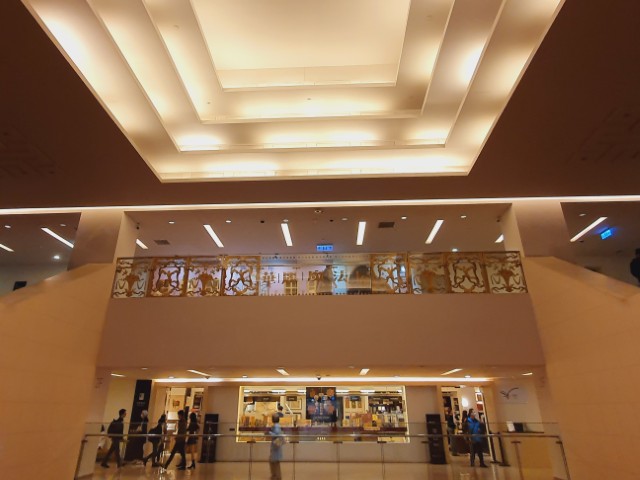
The National Palace Museum collection is staggering in scale. It has over 700,000 artefacts spanning thousands of years of Chinese civilisation.
Bear in mind that this museum is massive and you won’t see everything in one visit, but with a bit of preparation you’ll see what actually interests you.
That’s why while on my way to the museum by train and bus, I browsed the museum’s user-friendly website and made screenshots of the exhibits I wanted to see most.
When I arrived I was still a little overwhelmed.
On the ground floor I found some helpful orientation with timelines explaining the dynasties.
I went on to see a gallery of rare Buddhist sculpture, Chinese ceramics, painting, calligraphy, jade carving, and porcelain.
The style of many of the artworks was so delicate and impressive.
I enjoyed seeing how the techniques evolved over the years.
Two pieces have genuine celebrity status in this museum. The Jadeite Cabbage is a lifelike jade sculpture, complete with two tiny insects hidden in the leaves.
The other famous work is a meat-shaped Stone, carved to resemble the real things.
These “celebrity objects” are in fact tiny, super detailed sculptures, famous for the level of craftsmanship.
There are many other Chinese historical treasures around the museum and you’ll find exhibition texts in English in every gallery.
I enjoyed those ancient artefacts but also the new multimedia gallery. It has some clever interactive displays worth seeing.
Is the National Palace Museum worth visiting?
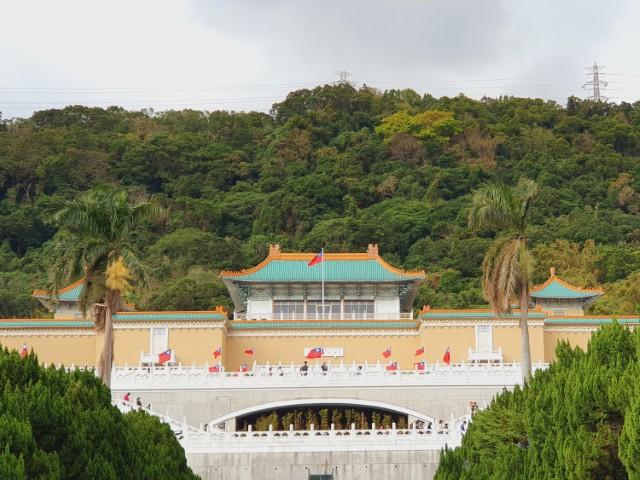
The National Palace Museum in Taipei is worth it for people who are interested in history, ancient artefacts, and fine art.
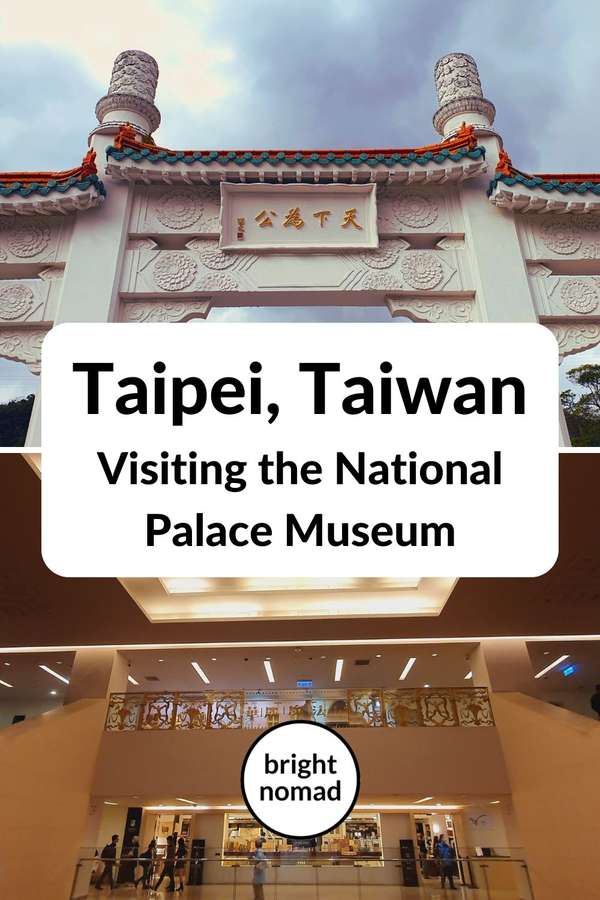
The architecture of the building itself was another reason I felt this museum was worth visiting.
It’s inspired by traditional palace architecture and looks very impressive against a hill backdrop.
This is a museum for people who appreciate a deep and contemplative experience. You want to go there on a day when you have plenty of time to learn and engage.
The only downside I found was the crowds. It’s a very popular museum, so I expected crowds even on a weekday.
In most rooms and galleries, it’s quite manageable because it’s a spacious museum, but there was a very long queue for the temporary exhibition (though I must say it was super organised and moved fast).
I asked a member of staff if long queues were a normal things there. She said it was just this special exhibition, so hopefully when you visit you’ll have a calmer experience.
A brief history of the National Palace Museum in Taipei
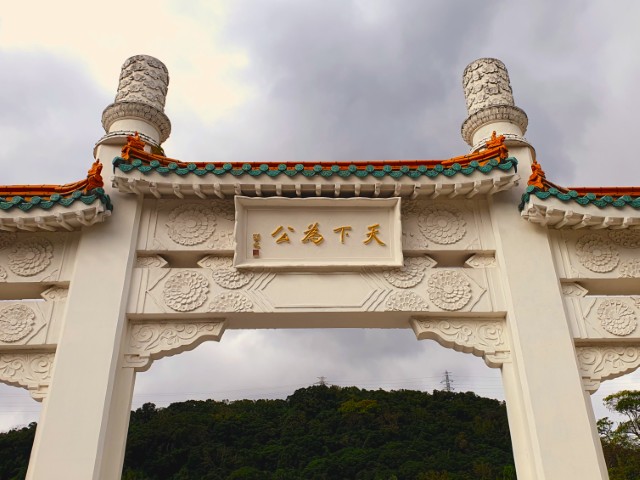
The story behind this museum is quite unusual and involves debates over cultural ownership and national identity.
It remains one of the most politically charged art collections in the world, claimed by both Taiwan and mainland China.
The collection originated with China’s imperial court, accumulated by emperors over several centuries, especially Qing‑dynasty emperors who built on earlier palace collections.
After the fall of the Qing dynasty, the new Republic gradually nationalised the palace treasures, and in 1925 they became part of the public Palace Museum in Beijing.
In the 1930s, with Japanese invasion looming, thousands of crates were packed up and moved south for safety.
After World War II, the Chinese Civil War forced another move, and in 1949 the Nationalist government shipped several thousand crates with the most significant pieces to Taiwan.
The National Palace Museum opened in Taipei in 1965 to house the collection.
My tips for visiting the National Palace Museum
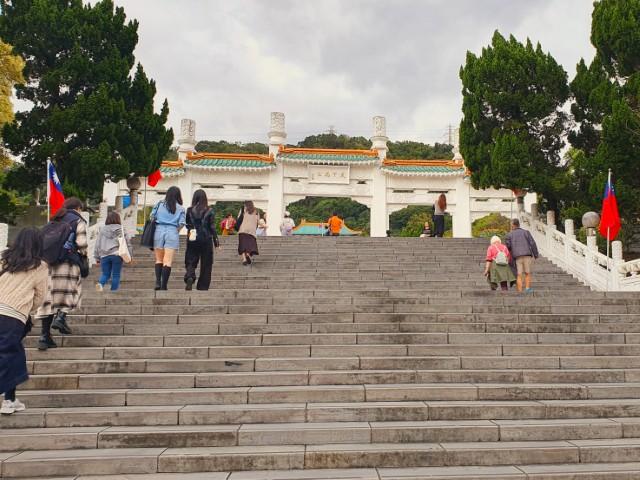
Visit Early: Arrive right when the museum opens to avoid the crowds, preferably on a weekday.
Join a guided tour or get an audio guide: If you make it to the museum in time for a guided tour in English, joining it will give you better insights. Otherwise, you can also rent an audio guide.
Visit the Chinese garden: the beautiful Zhishan Garden is right next to the museum and worth a visit.
Check what’s on: Exhibits change frequently. Check online for current displays and see what interests you most.
Visit the indigenous people museum: A 10 minute walk away there’s another great museum you can visit on the same day.
Shung Ye Museum of Formosan Aborigines is a fascinating museum that will give you all the background knowledge you may need about the indigenous people of Taiwan.
I watched a couple of introductory videos right after I entered that helped put things in historical context.
The exhibitions explore the culture of the indigenous people, including clothing and textile, ceremonies and traditions, and my personal favourite: the music corner where you can listen to traditional songs.
I got the combo ticket for both museums.
Plan for a full day: The National Palace Museum’s extensive collection can be overwhelming and requires time to appreciate fully.
Budget at least three to four hours, or even more if you like to linger.
I recommend you visit Shung Ye Museum of Formosan Aborigines on the same day because they’re very close to each other.
Getting to the museum takes a bit of time on public transport, and there aren’t many other attractions in that area that justify a second trip, so it makes sense to see both museums on the same day.
Browse more Asian destinations
Save this guide on how to visit the National Palace Museum in Taipei on Pinterest
1 Comment
As a digital nomad, I appreciate the heads-up on transport time. It sounds like a perfect day trip to disconnect from the laptop and soak in some deep history.