Europe has some lovely destinations where you can enjoy milder temperatures, outdoor cafés and plenty of sunshine even in the middle of winter.
Places in southern Europe and the Atlantic islands enjoy relatively warm days.
Of course, winter sun in Europe doesn’t always mean beach weather. Temperatures can vary quite a bit between destinations, and evenings are often quite cool.
But if you’re looking for a change of scenery, a chance to spend more time outdoors or simply a break from the winter blues, there are some fantastic options.
In this guide, I’ll share some of the best sunny winter destinations in Europe, from islands with pleasantly warm temperatures to charming cities that are perfect for a winter escape.
Table of contents
Where is the warmest place in Europe in winter?
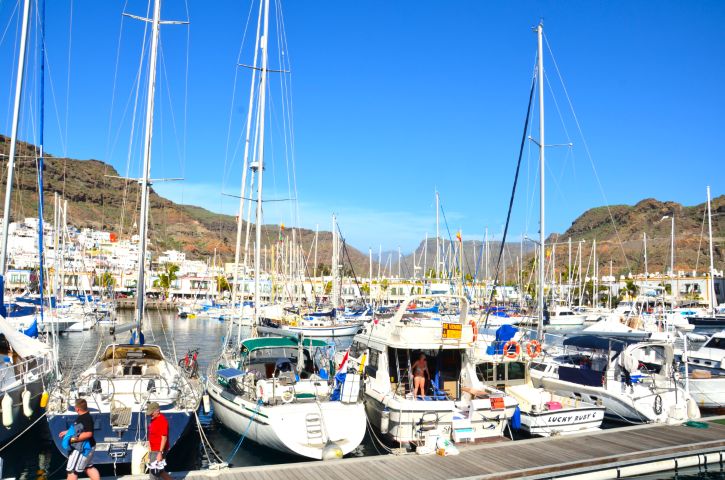
If you’re looking for the warmest place in Europe in winter, the Canary Islands are your best bet.
Located off the north-west coast of Africa but part to Spain, this sunny archipelago enjoys mild temperatures throughout the year, making it one of Europe’s most reliable winter-sun destinations.
The weather varies by island and location.
Southern Tenerife and southern Gran Canaria are particularly good choices if you’re hoping to maximise your chances of sunshine.
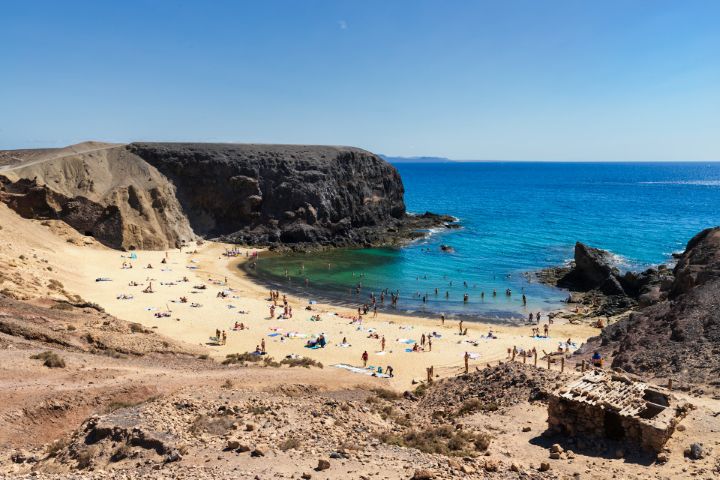
Lanzarote and Fuerteventura are also lovely options, especially if you enjoy beaches, dramatic volcanic landscapes and outdoor activities.
Another great option is Madeira, a Portuguese island known for its lush scenery, spectacular coastal views and excellent hiking trails.
It’s a particularly good choice if you’d rather explore nature than spend your holiday lounging on a beach.
If you’d prefer to stay on the European mainland, head to southern Spain.
Málaga and Seville are among the warmest mainland destinations in winter.
You probably won’t be sunbathing all day, but you can enjoy outdoor sightseeing, tapas on a sunny terrace and a much gentler winter than in northern Europe.
Best sunny winter destinations in Europe
Canary Islands, Spain
Best for: beach days, warm weather and outdoor adventures.
A good European winter escape is geographically much closer to Africa, though officially part of Spain.
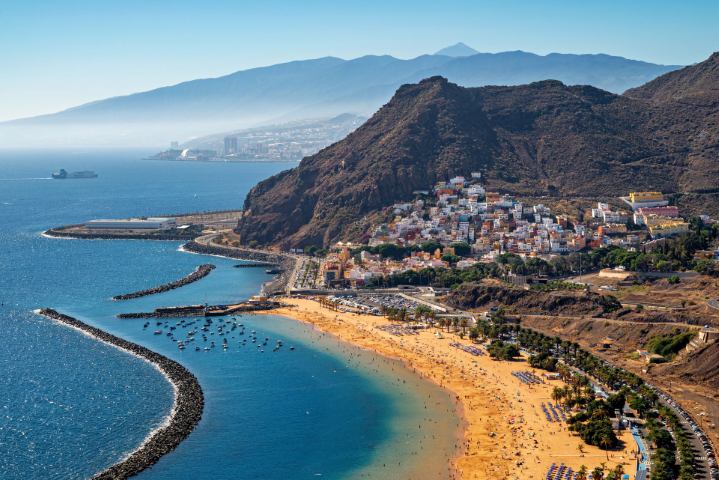
Sitting off the north-west coast of Africa, the Canary Islands form an archipelago with sunshine and mild temperatures throughout the year.
While it’s not guaranteed beach weather every day, you can often spend time outdoors in a T-shirt, enjoy lunch on a sunny terrace or explore the coastline without worrying about freezing temperatures.
Each island has its own personality, so there’s more than one way to enjoy a winter break here.
Tenerife has beautiful beaches, lively resort towns and plenty of opportunities for adventure.
Head to the south of the island for the best chance of sunny, dry weather, or explore Teide National Park for a completely different landscape.
Gran Canaria offers a little bit of everything, from the golden dunes of Maspalomas to charming mountain villages and lively coastal resorts.
If you’re after a relaxed beach holiday, the south of the island is a good place to start.
Lanzarote is perfect if you love unusual landscapes and a slower pace.
Its volcanic scenery, whitewashed villages and beautiful beaches make it a lovely destination for exploring by car.
Fuerteventura is a favourite among beach lovers and watersports enthusiasts.
It has some of the archipelago’s most beautiful sandy beaches, as well as excellent conditions for surfing, windsurfing and kitesurfing.
Things to do in the Canary Islands in winter
- Spend a sunny afternoon on the beaches of Tenerife or Gran Canaria.
- Explore the volcanic landscapes of Lanzarote’s Timanfaya National Park.
- Visit the dunes of Maspalomas in Gran Canaria.
- Try surfing or windsurfing in Fuerteventura.
- Visit Teide National Park and enjoy the island’s spectacular mountain scenery.
Where to stay in the Canary Islands
For the warmest and sunniest conditions, look for accommodation in southern Tenerife or southern Gran Canaria.
If you’re planning to explore the islands, renting a car can make it much easier to discover beaches, villages and natural attractions at your own pace.
Planning your trip to the Canary Islands
- Compare flights to the Canary Islands.
- Browse hotels and holiday apartments in the Canary Islands.
- Checking out organised excursions.
Madeira, Portugal
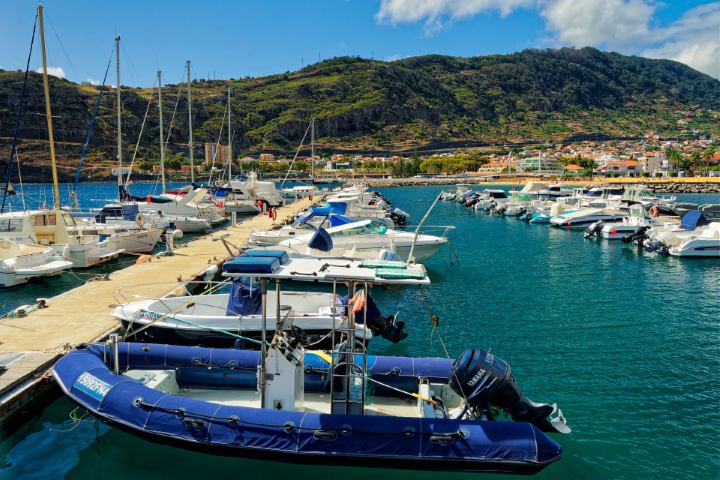
Best for: nature, hiking and scenic coastal escapes.
If your idea of a winter getaway involves dramatic landscapes, lush green mountains and beautiful ocean views, Madeira is a wonderful choice.
This Portuguese island in the Atlantic is known as the Island of Eternal Spring, thanks to its mild climate and year-round greenery.
Winter temperatures are generally around 18–20°C during the day.
While Madeira isn’t quite as hot as the Canary Islands, it’s still a lovely place to escape colder weather and spend time outdoors.
You might get the occasional rainy spell, particularly in the mountains, but there are plenty of sunny days to enjoy.
Madeira is especially appealing if you’re more interested in exploring than spending your entire holiday on the beach.
The island is famous for its levadas , historic irrigation channels that now form an extensive network of walking trails through forests, valleys and mountain scenery.
Some routes offer spectacular views over the Atlantic, while others take you through the island’s Laurissilva forest, a UNESCO-listed natural site.
Start your visit in Funchal, Madeira’s charming capital.
Wander through the old town, visit the colourful farmers’ market, take the cable car up to Monte and enjoy the views over the city.
You can also visit the botanical gardens or spend an afternoon sampling Madeira wine.
For a different perspective, head out to Cabo Girão, one of Europe’s highest sea cliffs, where a glass-floored viewing platform looks out over the coastline.
Things to do in Madeira in winter
- Explore Funchal’s old town and visit the Mercado dos Lavradores.
- Take a free walking tour in Funchal.
- Take a cable car up to Monte and enjoy the views.
- Walk one of Madeira’s scenic levada trails.
- Visit Cabo Girão’s glass-floored viewing platform.
- Watch the sunrise above the clouds at Pico do Arieiro.
- Discover the Laurissilva forest and its beautiful walking routes.
Where to stay in Madeira
Funchal is a convenient base, with plenty of restaurants, hotels and easy access to organised excursions.
If you’d prefer a quieter stay, consider the coastal areas around Ponta do Sol or Calheta, which are popular for their sunny microclimates and relaxed atmosphere.
Planning your trip to Madeira
- Compare flights to Funchal.
- Browse hotels and holiday apartments in Madeira.
- Look into guided levada walks or organised island tours.
- A rental car is also worth considering if you’d like the flexibility to explore viewpoints, villages and coastal spots at your own pace.
Algarve, Portugal
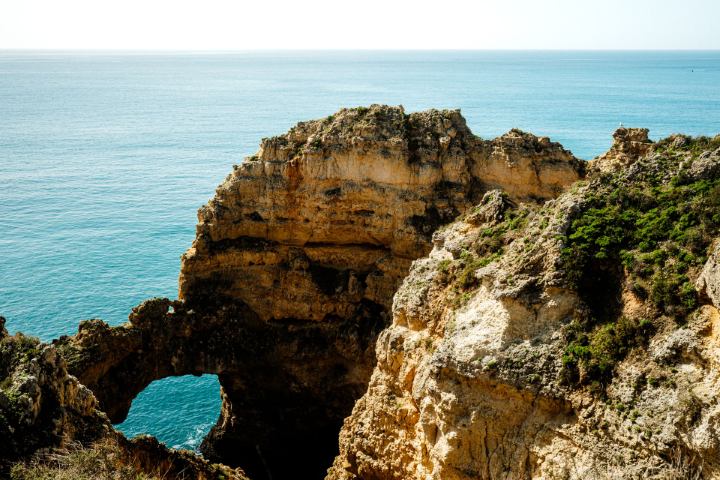
Best for: coastal scenery, relaxed towns and outdoor adventures.
If you’re looking for a sunny winter escape with beautiful beaches, dramatic cliffs and charming coastal towns, the Algarve is a lovely option.
Located in southern Portugal, this region is famous for its golden coastline, picturesque villages and relaxed atmosphere.
Winter temperatures are generally around 15–17°C during the day. It’s cooler than the Canary Islands or Madeira, so don’t expect guaranteed beach weather, but sunny days are still common.
One of the Algarve’s biggest attractions is its coastline.
The region is dotted with beautiful beaches framed by ochre cliffs, hidden coves and impressive rock formations.
Praia da Marinha, often considered one of Portugal’s most scenic beaches, is well worth a visit.
You can also explore the famous sea caves around Benagil, either by boat or on a guided coastal excursion, depending on sea conditions.
For a taste of local life, spend some time in Lagos, a charming town with cobbled streets, historic buildings and a lovely marina.
Nearby, Ponta da Piedade offers spectacular coastal views, with unusual rock formations rising from the turquoise water.
Further east, Tavira is a quieter and more traditional option, known for its pretty old town, historic bridge and relaxed atmosphere.
If you enjoy walking, winter is actually a great time to explore the Algarve’s coastal trails. The cooler temperatures make longer walks more comfortable than in the heat of summer, and you’ll often find the region much quieter.
Things to do in the Algarve in winter
- Explore the dramatic cliffs and rock formations at Ponta da Piedade.
- Visit Praia da Marinha and enjoy the beautiful coastal scenery.
- Discover Lagos’s old town, marina and waterfront.
- Take a boat trip to explore the Benagil sea caves, weather and sea conditions permitting.
- Wander through the historic streets of Tavira.
- Walk part of the Seven Hanging Valleys Trail for spectacular ocean views.
Where to stay in the Algarve
Lagos is a great base if you want a mix of restaurants, coastal walks and sightseeing.
For a quieter atmosphere, consider Tavira or Carvoeiro.
If you’re mainly interested in resort facilities and a convenient base for exploring, Albufeira has plenty of accommodation options, although some businesses and seasonal attractions may have reduced opening hours in winter.
Planning your trip to the Algarve
- Compare flights to Faro Airport.
- Browse hotels and holiday apartments in the Algarve.
- Renting a car is a particularly good idea if you want to explore several coastal towns and beaches during your stay.
- Look into guided boat trips.
Malta
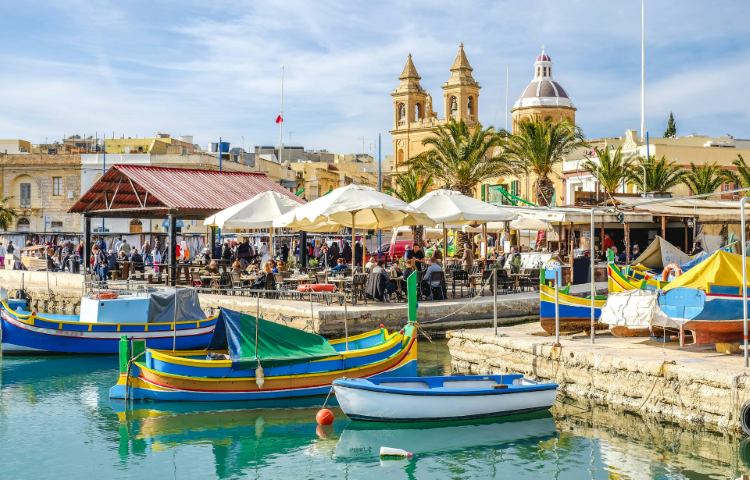
Best for: history, charming towns and sunny Mediterranean days.
This small Mediterranean island country enjoys a relatively mild winter, with plenty of sunny days and comfortable temperatures for sightseeing.
Winter daytime temperatures are typically around 15–17°C. It can get windy or rainy at times, and evenings are usually cooler, but you’ll often find pleasant conditions for exploring outdoors.
It’s not necessarily a beach holiday at this time of year, but it’s a wonderful opportunity to discover Malta without the intense summer heat and crowds.
One of the best places to start is Valletta, Malta’s compact and atmospheric capital.
Its narrow streets, colourful balconies and impressive Baroque architecture make it a pleasure to explore on foot.
Visit St John’s Co-Cathedral, wander through the Upper Barrakka Gardens and enjoy views across the Grand Harbour.
Another must-see is Mdina, often called the Silent City.
This beautiful walled town feels like stepping back in time, with winding lanes, historic palaces and quiet little squares.
It’s particularly lovely for a relaxed afternoon of exploring and photography.
For coastal scenery, head to Dingli Cliffs, where walking paths offer spectacular views over the Mediterranean.
You can also visit Marsaxlokk, a picturesque village known for its colourful traditional boats and relaxed atmosphere, or take a ferry trip to the nearby island of Gozo for a slower pace and more dramatic landscapes.
Malta is also full of fascinating historical sites. The ancient temples of Ħaġar Qim and Mnajdra are particularly impressive, while the Three Cities offer a glimpse into the island’s rich history and heritage.
Things to do in Malta in winter
- Explore Valletta’s historic streets and visit St John’s Co-Cathedral.
- Swim at the Comino Blue Lagoon.
- Wander through the medieval town of Mdina.
- Enjoy panoramic Mediterranean views from Dingli Cliffs.
- Discover the historic Three Cities across the Grand Harbour.
- Visit the prehistoric temples of Ħaġar Qim and Mnajdra.
- Take a day trip to Gozo by ferry and explore its villages and countryside.
- Stroll along the waterfront in Sliema and enjoy the sunny coastal views.
Where to stay in Malta
Valletta is an excellent choice if you want to be close to historic attractions, cafés and cultural sites.
Sliema is a convenient base with plenty of accommodation, shops and transport connections.
If you prefer somewhere quieter and more traditional, consider staying in Mdina or the neighbouring town of Rabat.
Planning your trip to Malta
- Browse hotels in Malta.
- Compare flights to Malta International Airport.
- Renting a car is a good idea if you want to explore Gozo, the countryside and more remote coastal areas. In Malta, you drive on the left.
- Book a free walking tour in Valletta.
- Pick a boat trip in Malta.
- My tip: If you’re visiting for a few days, you can combine Valletta and Mdina with a day trip to Gozo.
Cyprus
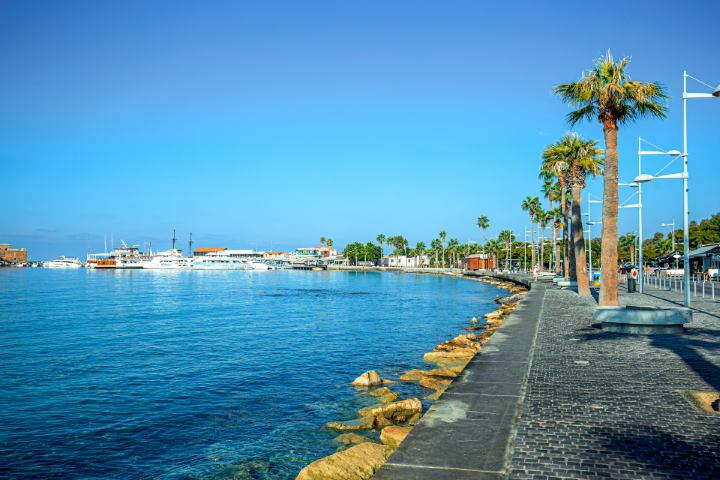
Best for: mild winter weather, coastal scenery and ancient history.
Located in the eastern Mediterranean, this island enjoys one of the mildest winters in Europe, making it a lovely destination for a winter break.
Daytime temperatures are typically around 16–18°C between December and February, although they can vary depending on where you are on the island.
You might not get guaranteed beach days, but there are often plenty of opportunities to enjoy outdoor cafés, scenic walks and sightseeing without the summer heat.
One of the most popular places to visit is Paphos, a coastal town with a fascinating mix of history and natural beauty.
Explore the UNESCO-listed Archaeological Park, where you’ll find impressive Roman mosaics, ancient ruins and historic sites. I’d set aside a couple of hours here.
The harbour is also a lovely place for a stroll, especially on a sunny afternoon.
If you enjoy beautiful coastal scenery, head to Cape Greco, near Ayia Napa.
This protected natural area is known for its dramatic cliffs, sea caves and walking trails with wonderful views of the Mediterranean.
For a city break, Limassol offers a lively waterfront, a charming old town and plenty of cultural attractions.
You can wander through its historic streets, visit Limassol Castle or explore the ancient city of Kourion (within easy reach of Limassol), which has spectacular views over the sea.
Things to do in Cyprus in winter
- Explore the ancient ruins and Roman mosaics at Paphos Archaeological Park.
- Swim at Adonis Baths Waterfalls.
- Visit the Tombs of the Kings, a UNESCO-listed archaeological site.
- Walk along the coastal trails and admire the scenery at Cape Greco.
- Discover Limassol’s old town and visit its medieval castle.
- Explore the ancient ruins of Kourion and enjoy the panoramic coastal views.
- Take a scenic drive through the Troodos Mountains and visit traditional villages.
- Spend an afternoon wandering around the charming streets of Lefkara, known for its traditional architecture and crafts.
Where to stay in Cyprus
Paphos is a great base if you’re interested in history, coastal walks and a relaxed atmosphere.
Limassol is a good choice if you prefer a livelier city with plenty of restaurants, shops and cultural attractions.
If you’re planning to explore the eastern coast, consider staying around Ayia Napa or Protaras, although some resorts and businesses may operate on reduced schedules during winter.
Planning your trip to Cyprus
- Browse hotels in Cyprus.
- Compare flights to Larnaca International Airport or flights to Paphos International Airport.
- Renting a car is a particularly good idea if you want to explore different parts of the island, from the coastal towns to the Troodos Mountains. It gives you much more flexibility than relying on public transport.
- Look into guided tours and day trips around Cyprus.
- My tip: The coastal areas are generally milder, while the Troodos Mountains can be colder. Bring layers just in case.
Seville, Spain
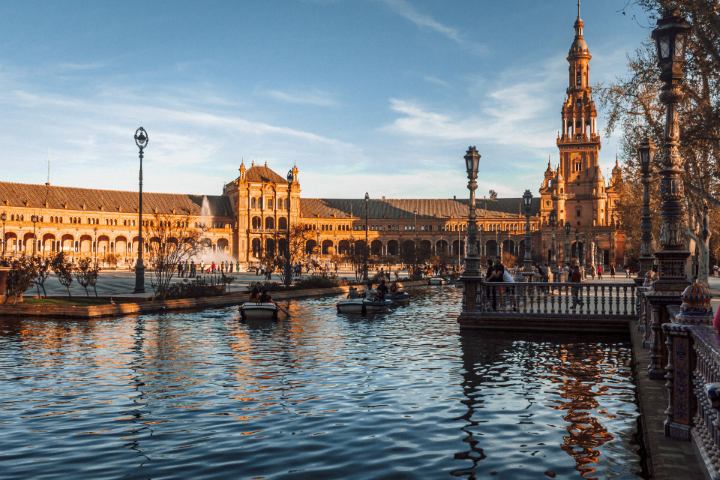
Best for: culture, beautiful architecture and sunny city breaks.
Located in the heart of Andalusia in southern Spain, this beautiful city is known for its colourful streets, impressive architecture, lively plazas and relaxed outdoor lifestyle.
Winter daytime temperatures are typically around 16–18°C, although sunny days can sometimes feel warmer. It can get chilly in the evenings, but the milder weather makes winter an excellent time to explore the city on foot.
You’ll also avoid the intense summer heat, when temperatures in Seville can become unbearably high.
One of the city’s most famous landmarks is the Real Alcázar of Seville, a spectacular royal palace with intricate architecture, beautiful courtyards and lush gardens. I’d go first thing in the morning (if you can).
Just a short walk away, you’ll find Seville Cathedral and its famous bell tower, La Giralda.
Climb to the top for wonderful views over the city, then spend some time wandering through the narrow streets of Santa Cruz, the historic Jewish quarter, with its pretty squares and traditional Andalusian architecture.
For a different perspective, head to Plaza de España, one of Seville’s most impressive landmarks.
Its grand semicircular building, colourful tiled details and peaceful canal make it a lovely place to explore and photograph.
You can also take a stroll through the nearby María Luisa Park, especially pleasant on a sunny winter afternoon.
And if you enjoy discovering local neighbourhoods, don’t miss Triana, located across the Guadalquivir River.
If I only had one evening in Seville, I’d spend it in Triana, wandering with no fixed plan.
It’s known for its colourful streets, traditional ceramics and lively atmosphere. It’s a lovely area to explore at a slower pace, with plenty of cafés and independent shops along the way.
Things to do in Seville in winter
- Visit the beautiful Real Alcázar and explore its gardens.
- Climb La Giralda for panoramic views over Seville.
- Wander through the historic Santa Cruz neighbourhood.
- Admire the architecture and colourful tiles at Plaza de España.
- Enjoy a relaxing walk through María Luisa Park.
- Explore Triana and discover its traditional ceramics.
- Take a free walking tour to learn more about Seville’s history and architecture.
- Experience a traditional flamenco performance in an intimate local venue.
Where to stay in Seville
The historic centre is a great base if you want to be within walking distance of the main attractions.
Santa Cruz is particularly charming, while El Arenal is a convenient option close to the cathedral and the river.
If you prefer a more local atmosphere, consider Triana, which has plenty of character and good connections to the city centre.
Planning your trip to Seville
- Browse hotels in Seville.
- Compare flights to Seville Airport.
- Renting a car is useful if you’re planning day trips around Andalusia. For a city break just in Seville itself, a car isn’t essential, as it’s a very walkable city with good public transport.
- Join a guided walking tour of Seville.
- Book tickets to a flamenco show. It’s performed in a unique local style. For me, it was a great cultural experience and I ended up going to two different shows on the same trip.
- Plan day trips to Córdoba and the White Villages of Andalusia.
- My tip: I recommend you visit the main outdoor attractions during the middle of the day, when temperatures are usually at their most pleasant.
Málaga, Spain
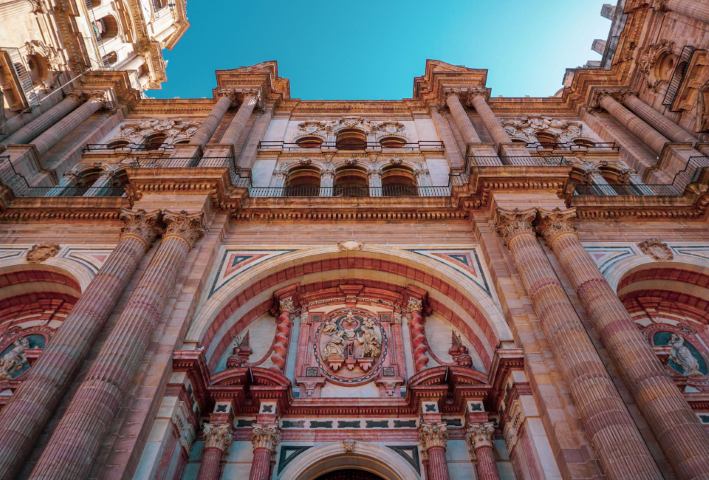
Best for: city breaks, coastal walks and a relaxed Andalusian atmosphere.
Located on Spain’s Costa del Sol, this lively coastal city combines historic architecture, beautiful beaches, art galleries and a relaxed Mediterranean atmosphere.
Winter daytime temperatures are typically around 16–18°C, with plenty of sunny days to enjoy.
It can be cooler in the evenings, but the mild weather makes Málaga a lovely place to explore on foot.
I found Málaga one of the easiest Spanish cities to enjoy, as almost everything is within walking distance.
You can wander through the old town, sit outside at a café or enjoy a walk along the seafront without the summer crowds.
Start your visit in Málaga’s historic centre, where you’ll find narrow pedestrian streets, charming squares and impressive architecture.
Don’t miss Málaga Cathedral, affectionately known as La Manquita, or the nearby Museo Picasso Málaga, dedicated to the city’s most famous artistic son.
For some of the best views in town, make your way up to the Alcazaba, a beautifully preserved Moorish fortress overlooking the city.
If you have the energy, continue up to Gibralfaro Castle, where you’ll be rewarded with panoramic views of Málaga’s rooftops, harbour and coastline.
Málaga also has a lovely waterfront area. Take a stroll along Muelle Uno, a modern promenade lined with shops and cafés, or head to La Malagueta Beach for a relaxing walk by the sea.
If you’d like to explore beyond the city, Málaga is also a convenient base for discovering more of Andalusia.
The famous white village of Mijas is an easy day trip, while the spectacular Caminito del Rey (a longer trip from Málaga) offers a walking experience for anyone who enjoys dramatic scenery and outdoor adventures.
Things to do in Málaga in winter
- Explore Málaga’s historic centre and admire its beautiful architecture.
- Visit the Alcazaba and enjoy the views from Gibralfaro Castle.
- Discover the art and life of Pablo Picasso at Museo Picasso Málaga.
- Take a relaxing walk along Muelle Uno and the waterfront.
- Enjoy the sunshine at La Malagueta Beach.
- Visit the colourful Mercado de Atarazanas and discover local produce.
- Take a day trip to the picturesque white village of Mijas.
- Explore the dramatic scenery of Caminito del Rey on a guided excursion.
Where to stay in Málaga
The historic centre is the best choice if you want to be close to the main attractions, shops and cafés.
Soho is a great alternative if you prefer a creative neighbourhood with independent galleries and a lively atmosphere.
For a stay closer to the sea, consider La Malagueta, which offers easy access to the beach and waterfront promenade.
Planning your trip to Málaga
- Browse hotels and holiday apartments in Málaga.
- Compare flights to Málaga Airport.
- Renting a car is useful if you’re planning to explore beyond the city, particularly if you want to visit Mijas, the surrounding white villages or other parts of Andalusia. For a city break just in Málaga itself, you don’t need a car.
- Book a free walking tour in Málaga.
- Look at Caminito del Rey excursions and other day trips from Málaga.
- My tip: Plan your visits to the Alcazaba and Gibralfaro for a sunny day.
Sicily, Italy
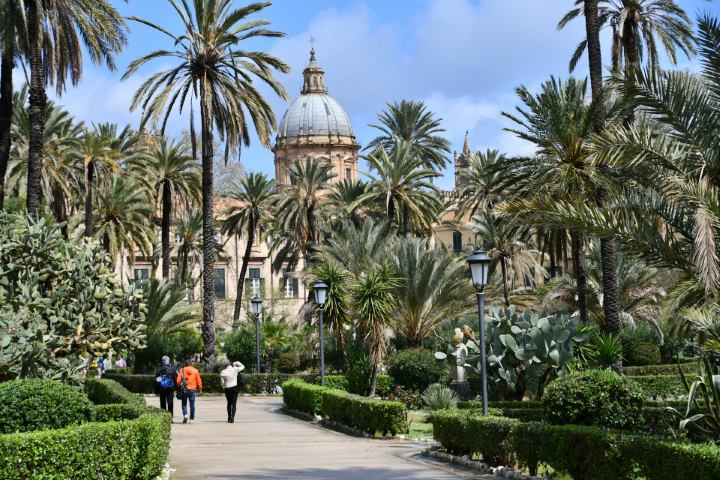
Best for: beautiful towns, ancient history and a taste of Italian culture.
Located just off the southern tip of mainland Italy, this Mediterranean island offers a fascinating mix of historic towns, impressive archaeological sites, dramatic landscapes and beautiful coastal scenery.
Winter temperatures are generally around 14–17°C during the day, although conditions vary across the island.
It’s not quite warm enough for a typical beach holiday, but there are often sunny days that are perfect for sightseeing, exploring charming towns and enjoying a slower pace of travel.
Winter is also a lovely time to visit popular attractions without the crowds of the summer season.
One of the best places to start is Palermo, Sicily’s vibrant capital.
The city is full of character, with impressive churches, colourful markets and a fascinating mix of architectural styles.
Visit the magnificent Palermo Cathedral, explore the Palazzo dei Normanni and its beautiful Palatine Chapel, and wander through the historic streets of the old town.
For a completely different atmosphere, head to Taormina, one of Sicily’s most picturesque towns with spectacular views, elegant streets and charming little squares.
The ancient Greek Theatre is a must-see, particularly on a clear day when Mount Etna, Europe’s highest active volcano, provides a dramatic backdrop.
You can see the volcanic landscape on a guided excursion, visit the surrounding villages or take a cable car and guided tour, depending on weather conditions and access.
History lovers should also make time for Syracuse, particularly the beautiful island of Ortigia, with its historic streets, waterfront views and impressive Piazza del Duomo.
Nearby, the Neapolis Archaeological Park is home to ancient Greek and Roman ruins, including a remarkable Greek theatre.
Things to do in Sicily in winter
- Explore Palermo’s historic centre and visit its impressive cathedral.
- Discover the beautiful streets and ancient Greek Theatre in Taormina.
- Take a guided excursion to Mount Etna and explore its volcanic landscapes.
- Wander around Ortigia, the historic island at the heart of Syracuse.
- Visit the Valley of the Temples in Agrigento, one of Sicily’s most impressive archaeological sites.
- Explore the Baroque towns of Noto and Ragusa.
- Enjoy a scenic drive along the coast and discover Sicily’s charming smaller towns.
Where to stay in Sicily
Palermo is a great base if you’re interested in history, architecture and city life.
Taormina is ideal if you prefer beautiful views and a more romantic atmosphere, although some hotels and seasonal businesses may close during winter.
Syracuse, particularly Ortigia, is another lovely option for a relaxed stay surrounded by history and Mediterranean charm.
Planning your trip to Sicily
- Browse hotels and vacation rentals in Sicily.
- Compare flights to Palermo Airport or Catania Airport.
- Renting a car is a good idea if you want to see several parts of the island. There are public transport connections between the main cities, but having your own car makes things easier if you want to see smaller towns and villages too.
- Look into guided Mount Etna excursions.
- Book a free walking tour of Palermo.
- My tip: Sicily is a large island, so don’t try to squeeze everything into a short trip.
Valencia, Spain

Best for: sunny city breaks, beautiful architecture and a relaxed Mediterranean atmosphere.
Located on Spain’s eastern coast, this vibrant Mediterranean city offers a little bit of everything: historic streets, futuristic architecture, beautiful parks and a long stretch of sandy beach.
It’s one of my favourite cities in Europe.
Winter daytime temperatures are typically around 16–17°C. Sunny afternoons can feel warmer.
It’s not quite swimming weather, and evenings can get chilly, but you’ll often have pleasant conditions for exploring the city on foot, enjoying a coffee outdoors or cycling along the seafront.
One of the best places to start is Valencia’s Old Town, where you’ll find a maze of narrow streets, charming squares and impressive historic buildings.
Visit Valencia Cathedral, its the Miguelete bell tower for panoramic views and explore the beautiful Plaza de la Virgen.
Don’t miss the Central Market, either. Housed in a spectacular Modernist building, it’s a lovely place to discover local produce and admire the architecture.
For something completely different, head to the City of Arts and Sciences. This striking architectural complex is one of Valencia’s most recognisable landmarks, with futuristic white buildings reflected in pools of water.
One of Valencia’s biggest advantages is its amazing green space.
The Turia Gardens stretch through the city along the former riverbed of the Turia River, creating a wonderful route for walking, cycling or simply enjoying the sunshine.
You can even rent a bike and explore the gardens all the way towards the City of Arts and Sciences.
And if you’d like some time by the sea, head to Malvarrosa Beach. While the Mediterranean is generally too cold for swimming in winter, the wide sandy beach and palm-lined promenade are perfect for a relaxing walk on a sunny day.
Things to do in Valencia in winter
- Explore Valencia’s Old Town and visit the cathedral.
- Climb the Miguelete bell tower for views across the city.
- Admire the architecture of the City of Arts and Sciences.
- Visit the Central Market and discover its beautiful Valencian Modernista (Art Nouveau) design.
- Rent a bike and cycle through the Turia Gardens.
- Enjoy a walk along Malvarrosa Beach and the seafront promenade.
- Take a day trip to Albufera Natural Park and enjoy its peaceful landscapes.
Where to stay in Valencia
The Old Town is a great base if you want to be close to historic attractions, shops and cafés.
Ruzafa is a lively neighbourhood with independent boutiques, galleries and a creative atmosphere.
Planning your trip to Valencia
- Browse hotels in Valencia.
- Compare flights to Valencia Airport.
- Book a free walking tour or a bike tour in Valencia .
- Book your tickets for the City of Arts and Sciences.
- Look into a day trip to Albufera Natural Park.
- My tip: If you’re visiting in March, check the dates for Las Fallas, the city’s unique festival with sculptures and fireworks.
Crete, Greece
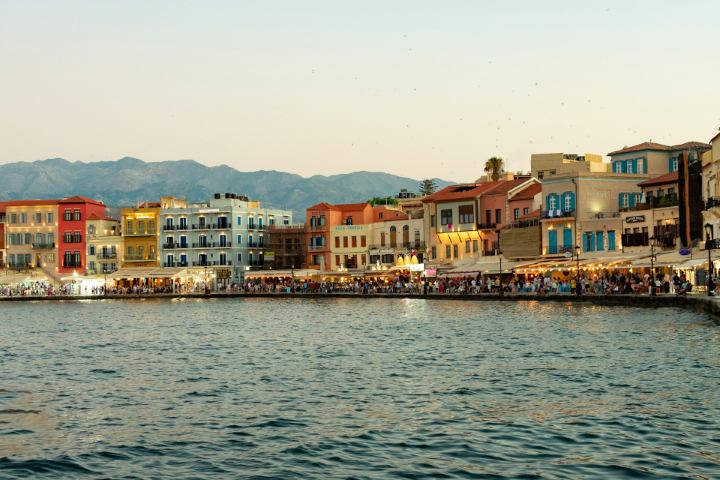
Best for: a winter escape with dramatic landscapes, charming old towns, ancient history and a slower pace of life.
Crete is one of the southernmost parts of Europe, so winter here can be milder than in many other destinations on the continent.
Expect daytime temperatures that often sit around 15–17°C, although rain, wind and cooler evenings are part of the season too.
Winter is a lovely time to discover Crete’s towns and landscapes at a more relaxed pace.
You can wander through the atmospheric streets of Chania and Rethymno, visit archaeological sites, enjoy scenic drives and stop at traditional villages along the way.
Some seasonal businesses and attractions may have reduced opening hours, so it’s worth checking ahead.
Things to do in Crete in winter
- Explore Chania’s picturesque Old Town, with its colourful streets, historic architecture and beautiful harbour.
- Wander around Rethymno’s Old Town and visit the Venetian fortress for lovely views.
- Discover the Palace of Knossos, one of the island’s most important archaeological sites.
- Visit Heraklion and explore the Archaeological Museum to learn more about Minoan civilisation.
- Take a scenic drive through the countryside and stop in traditional villages such as Archanes.
- Enjoy a walk in the countryside or along the coast on a clear, sunny day.
- Visit Lake Kournas, Crete’s only natural freshwater lake, for a peaceful change of scenery.
Where to stay in Crete
For a winter visit, I’d focus on one of the island’s main towns rather than a summer resort.
Chania: Stay near the Old Town or Venetian Harbour for a charming base with plenty to explore on foot.
Heraklion: Choose the city centre if you want easy access to the Archaeological Museum, restaurants and Knossos.
Rethymno: Look around the Old Town for historic character and a relaxed atmosphere.
Planning your trip to Crete
- Browse hotels and holiday apartments in Crete, particularly in Chania, Heraklion or Rethymno.
- Compare flights to Heraklion Airport or Chania Airport to see which works best for your itinerary.
- Renting a car in Crete is a good idea if you want to visit villages and archaeological sites beyond the main towns.
- Book Knossos Palace tickets.
- My tip: Some businesses close during the winter months, so check opening times before you go.
How to choose the best European winter sun destination
Some winter sun destinations in Europe offer warm, sunny days, great for outdoor adventures. Others are better for sightseeing and city breaks.
The best choice depends on what kind of holiday you’re after, when you’re travelling and how much warmth you’re hoping to find.
A quick list to help you choose where to go in Europe in winter:
- If you want the warmest weather in winter in Europe, choose the Canary Islands.
- For nature and hiking, choose Madeira.
- If you’re a history buff, choose Malta, Sicily or Crete.
- For beaches and relaxation choose the Algarve, Cyprus or Malta.
- If you’re after food and architecture, choose Sicily or Valencia.
- For a sunny city break, choose Seville or Málaga.
Think about the weather you want
If warm temperatures are your top priority, head as far south as possible. The Canary Islands are among the warmest places in Europe during winter, with plenty of sunshine.
Destinations such as Malta, Cyprus and the Algarve are also lovely for a warm winter holiday in Europe, but expect cooler days and occasional rain.
Choose the right month
Winter weather can vary quite a bit between December and March.
December: A good time to escape the cold, enjoy festive city breaks and find some winter sunshine.
January: Often one of the coolest months, so prioritise destinations with reliably mild weather, such as the Canary Islands.
February: A lovely month for exploring southern European cities, with the possibility of sunny afternoons and fewer visitors.
March: Spring starts to make an appearance across the Mediterranean. It’s a good time to be outside.
Decide if you want to rent a car
Some destinations are easy to enjoy without a car. If you’re planning to stay in one city, places like Seville, Málaga and Valencia have plenty to offer within walking distance and good public transport connections.
For exploring Madeira, Crete, Sicily or the Algarve, renting a car can give you much more flexibility.
You’ll be able to reach smaller villages, scenic viewpoints and natural attractions that may be harder to access by public transport.
Save this guide to sunny winter destinations in Europe on Pinterest