Follow my Westminster self-guided walking tour to see some of London’s most famous landmarks and iconic sights.
Westminster is the historic heart of London around the River Thames, where royal history, British politics, and some of the city’s most famous landmarks come together.
I visited Westminster’s attractions quite a few times in the past. On my last trip to London I visited many of them again and decided to create a walking route.
It covers all the highlights, such as Westminster Abbey and Buckingham Palace, plus a few lesser-known places that visitors may miss.
This walking tour is an easy way to experience one of the city’s most fascinating historic areas on foot.
You can take the walk in about 2 hours at a leisurely pace, but if you enter any of the attractions along the way, allow more time or spread it over 2 days.
Planning to visit Westminster attractions? Book ahead
Buckingham Palace: Book way in advance for the summer months.
Westminster Abbey: Find a time slot and book ahead.
Churchill War Rooms: Book tickets online with an audio guide.
Houses of Parliament: Book a tour with an audio guide.
The Royal Mews: Check availability here and find a time slot.
Table of contents
My Westminster self-guided walking tour route
The Westminster walking route starts at Victoria station and ends close to Westminster station, both tube stations are easy to access.
Westminster Cathedral and Buckingham Palace
Westminster Cathedral
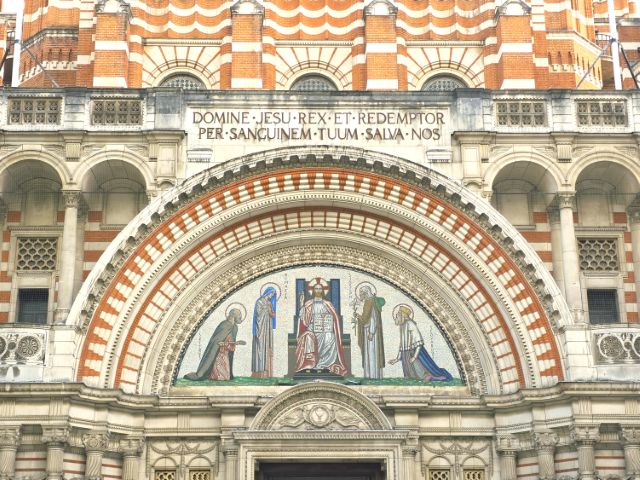
Our first stop is Westminster Cathedral (not to be confused with the better-known Westminster Abbey, which is where we end this Westminster tour).
It’s a few minutes’ walk from Victoria station.
Looking at it from the outside, the architecture is striking. It stands in sharp contrast with the contemporary buildings opposite.
The style is Neo-Byzantine. It has a tall Italianate campanile (bell tower) and red brick and white stone stripes, inspired by Byzantine basilicas in Italy.
Take your time appreciating the façade. I spent a few minutes taking photos of it.
When you step inside, you’ll soon notice something strange about the ceiling. It’s bare. Not quite as lavish as you’d expect from a cathedral.
I assumed it was under construction, but later found out that its decorative scheme had never been fully completed.
Mosaics are gradually being added as funds are raised.
Still, the walls are covered in marble and there are other parts of the cathedral that are beautifully decorated.
I found the Lady Chapel the most impressive. Also have a look inside the Chapel of the Blessed Sacrament, both are beautiful.
All the other chapels are worth wandering around as well, each with its own design.
Tickets: Free
Buckingham Palace and nearby attractions
For many tourists, Buckingham Palace is the main highlight of their visit to Westminster.
There are several places to visit in and around Buckingham Palace, including the Royal Mews, The King’s Gallery, the State Rooms, the palace façade, the Changing of the Guard ceremony, and the Victoria Memorial.
From Westminster Cathedral, it takes about 7 minutes to reach our next stop. Walk through the shopping centre opposite the cathedral.
As you exit the shopping centre you’ll see a sign with an arrow pointing in the direction of Buckingham Palace.
Continue on Palace Street until you see the Royal Mews shop. The main entrance is to the left of that shop.
The Royal Mews, Buckingham Palace
The Royal Mews at Buckingham Palace is the historic home of the royal family’s state vehicles and horses.
It’s responsible for the King’s and royal family’s road transport, including horses, carriages and cars.
If you go inside, you can see beautifully crafted carriages, including the famous Gold State Coach used at coronations and major royal occasions.
In the shop you’ll find royal souvenirs and gifts inspired by horses and carriages.
Tickets: Book online
The King’s Gallery
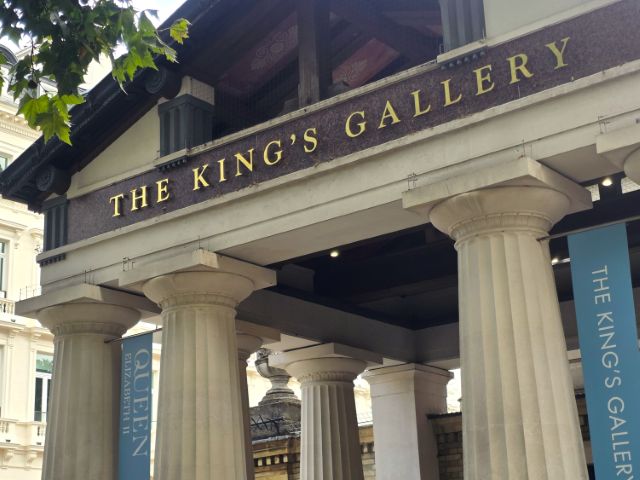
Exit the Mews through the shop and walk for a couple of minutes to the King’s Gallery.
This gallery is great for both art lovers and royal history fans.
The gallery occupies the site of Buckingham Palace’s former private chapel, which was destroyed during the Second World War.
The building was reconstructed as an art gallery and opened to the public in 1962.
These days it hosts changing exhibitions from the Royal Collection.
Inside you’ll see paintings, decorative arts, and historic items related to the British monarchy.
Tickets: Book online. When I visited, there was a queue to get in.
Buckingham Palace State Rooms
Close to the King’s Gallery you’ll see the entrance gates to the State Rooms.
The State Rooms at Buckingham Palace are only open in summer (roughly July–September).
Inside you can get a rare glimpse inside one of the world’s most famous royal residences.
The rooms are magnificent and richly decorated, with fine furniture and works of art.
They are used for ceremonial, official, diplomatic and other formal occasions.
Some highlights include:
- The Ballroom: The largest room in the palace and the most impressive one, used for hosting banquets.
- The Throne Room: A grand ceremonial space featuring the famous pair of throne chairs used for royal occasions and photographs.
- The White Drawing Room: One of the palace’s most elegant rooms, with gilded details and luxurious furnishings.
- The Grand Reception Room: A spectacular formal room with crimson and gold decoration and a magnificent chandelier. Used for receptions and official gatherings.
- The Grand Staircase: Beautifully decorated. Note the gilded details and portraits of members of the royal family.
Tickets: Book online. Summer tickets can sell out, so book as soon as the new season’s dates are released.
Buckingham Palace Changing of the Guard
Around the corner from The King’s Gallery, you’ll find the forecourt of Buckingham Palace, where the Changing of the Guard ceremony takes place.
To see it, you’ll need to arrive on Monday, Wednesday, or Friday before 11 am. I suggest you arrive by 10 am if you want a good spot.
Check the official schedule on the day, especially if the weather is bad.
There’s normally a large gathering of people taking photos in front of the main gate.
Many people stand along the railings, but you can also stand along The Mall, near the edge of St James’s Park. You can watch the guards approach and leave the palace.
Tickets: Free
Victoria Memorial
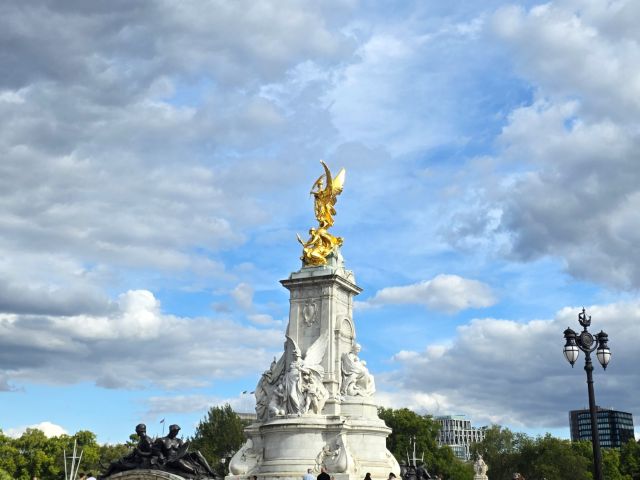
Directly in front of Buckingham Palace, you’ll see the Victoria Memorial.
The tall monument commemorates Queen Victoria.
At the top is a gilded allegorical figure of Victory, holding a palm branch and standing above a globe.
You’ll see a seated statue of Queen Victoria at the front of the monument, facing The Mall.
The other figures in the monument represent courage, constancy, charity, truth and motherhood.
You can climb up to see them up close.
It’s also a good idea to take photos of the palace from the monument.
Tickets: Free
From St James’s Park to Churchill War Rooms
This part of the tour covers things to see after you visit the palace.
St James’s Park
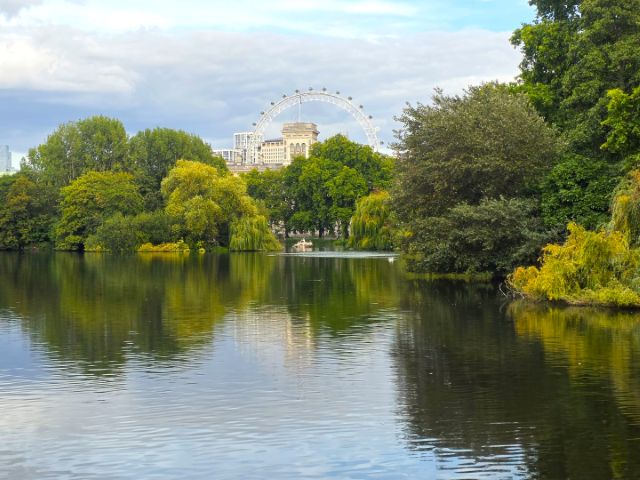
Next on our tour: a walk in the park. St James’s Park is right next to Buckingham Palace.
It’s a good spot to get a coffee and rest your feet.
St James’s Park is one of London’s eight Royal Parks. These parks have historical connections to the monarchy and are now open to the public.
I like standing on the bridge from which you can take photos of the little lake and spot the London Eye popping above the trees.
The Mall
When you leave the park you’ll notice the asphalt on the road is red, creating a “red carpet” leading up to the palace.
The road is called The Mall and it is used as a grand approach or a ceremonial route for royal events and other formal celebrations, state visits, and parades.
The Institute of Contemporary Arts
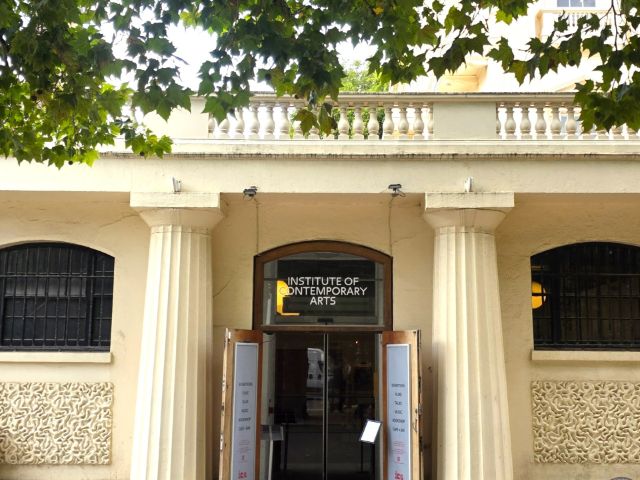
As you walk along the Mall away from the palace, you’ll see the Institute of Contemporary Arts (ICA) on your left.
This is one of London’s most significant spaces for contemporary culture.
It hosts cross-disciplinary events: changing exhibitions, film screenings, live music, performances, and talks.
I’ve always seen its radical and cutting-edge programme as an odd contrast to the formality of the royal buildings nearby.
It’s worth seeing what’s on to decide if you’d like to make a stop here. The bookshop at the entrance is also worth visiting. I often find unique books there.
Tickets: Pay at the door. Tip: This gallery is normally open late (for London), so you may want to visit it on another day in the late afternoon.
Duck Island Cottage
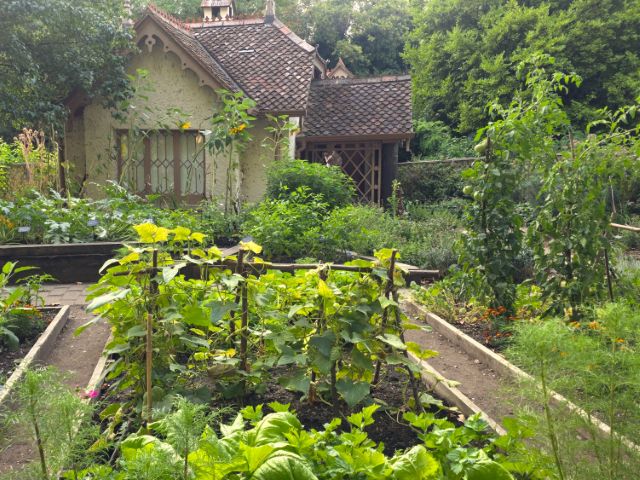
After leaving the ICA, cross the road and walk in St James’s Park towards the Churchill War Rooms, about 7 minutes away.
On the way you’ll pass by the cute Duck Island Cottage. It’s a fairytale-like little chalet, surrounded by a vegetable garden.
This was originally the home of the park’s royal bird keeper. Today it’s the headquarters for the London Historic Parks and Gardens Trust.
Churchill War Rooms
Our next stop is a popular one for the history buffs: the Churchill War Rooms.
This is where Winston Churchill and his War Cabinet directed Britain’s wartime operations in the Second World War, mainly during the Blitz.
After the war ended in 1945, some of the rooms were largely left as they were. What you see now is very close to how they were during the war.
Walking through the narrow corridors, you get a real sense of what life was like down here. There’s a lot to take in.
The Map Room is fascinating, with pins, maps and coloured markings tracking the progress of the war around the world.
The Transatlantic Telephone Room is an interesting surprise. Disguised as a lavatory or broom cupboard, it housed a secure telephone link that allowed Churchill to speak with President Franklin D. Roosevelt, using a voice scrambler. From the outside, nobody would have guessed what was going on inside.
The Churchill Museum section tells the story of Churchill’s life and legacy, with letters, speeches, and personal objects on display.
Tickets: Book online
Big Ben, Parliament, Westminster Abbey
The next part of the tour includes the iconic Elizabeth Tower, better known as Big Ben, as well as the Houses of Parliament and Westminster Abbey.
This part of London is often quite crowded.
Big Ben
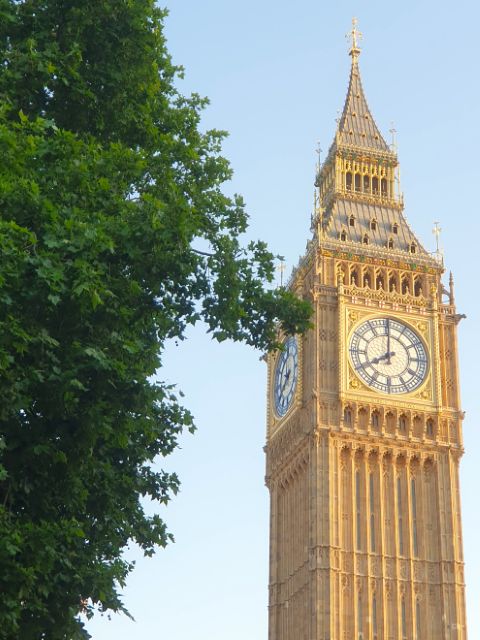
Big Ben is the nickname for the great bell inside the Elizabeth Tower.
Big Ben’s famous big bell strikes the hour, while smaller bells mark the quarter hours.
There are many angles from which you can take good photos of Elizabeth Tower and its clock faces, especially from the middle of Westminster Bridge or from Parliament Square.
You can enter the Elizabeth Tower and climb up 334 steps (with a few stops along the way).
You’ll see the clock mechanism, learn about its history and how it keeps time with such high accuracy, and hear Big Ben strike while you’re inside.
Unfortunately, photography isn’t allowed inside the tower.
The climb isn’t for everyone. It includes a lot of steps, some uneven surfaces, and narrow passageways. Consider whether you’re comfortable with that before booking.
Tickets: Book online well in advance.
Houses of Parliament
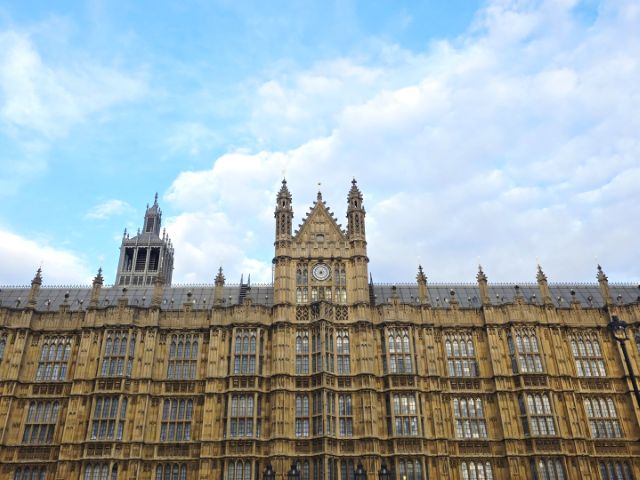
The Palace of Westminster is home to the UK Parliament, including the House of Commons and the House of Lords, where MPs and peers debate and vote on legislation.
The original medieval palace was largely destroyed by fire in 1834, and the present building was completed in the 19th century.
It’s a beautiful example of Gothic Revival architecture, with pointed arches and ornate stonework.
You can take photos outside the building, but if you go inside, photography is restricted in some parts of the palace.
If you have a good zoom lens, it’s fun to zoom in on the small decorative details.
You can enter the palace to see the interior and possibly see Parliament at work from the public galleries. It’s a nice treat for anglophiles.
Be prepared to go through security checks when you enter.
One of the tour highlights is Westminster Hall, the oldest part of the palace, with an impressive roof that survived the fire.
The Central Lobby is another impressive space, with an octagonal design and colourful mosaics.
The House of Commons Chamber, with the green benches you may have seen on TV, is where members of parliament debate and vote.
You’ll also see the House of Lords Chamber, with its red benches, ornate gold decoration and the monarch’s throne, used during the State Opening of Parliament.
There’s plenty of art to see inside the palace as well, including Victorian mosaics and paintings.
You’ll learn about the history and functions of different parts of the palace during the tour.
Tickets: Book online. Audio guide included.
Alternatively, book a combined ticket to the Houses of Parliament and Westminster Abbey. That Abbey is our next stop on this Westminster walk.
Westminster Abbey
From the Houses of Parliament, cross the street towards Westminster Abbey, another famous stop on this tour.
Westminster Abbey is one of Britain’s most important historic buildings.
Westminster Abbey has been the coronation church since 1066, and 40 monarchs have been crowned here.
Once you step inside, the atmosphere is extraordinary.
There’s a lot to see inside, but first look for the old Coronation Chair, the Cosmati Pavement, and royal tombs.
Poets’ Corner is a unique place to see in Westminster Abbey, especially for literature lovers.
It’s where writers, poets, and playwrights have their tombs or memorials.
You’ll spot many well-known names there, including Geoffrey Chaucer, Charles Dickens, and Jane Austen.
Some authors were buried there and others were commemorated at different times. Shakespeare’s monument was placed there many years after his death. Oscar Wilde received a stained glass memorial in 1995.
Tickets: Book online. The entry ticket includes a multimedia guide, or you can book a guided tour.
This is where our Westminster self-guided walking tour ends. The nearest station is Westminster tube station, just a few minutes away on foot.
Browse London guide
Share this Westminster self-guided walking tour on Pinterest