
What are the best tips on getting around London using public transport?
Getting around London can be a bit of a challenge for tourists, even for seasoned travellers, because the city is massive and its transport network is complex.
I created this guide to help you avoid common London transport mistakes, with solutions that will save you time, money, and energy.
Table of contents
Understanding London’s size and zones
London is a huge city. It’s particularly important to remember that when you decide which hotel to book.
In London, “central” isn’t always what it seems. Zone 2 sounds close to Zone 1 on paper, but depending on where exactly you are and where you’re trying to get to, you could be looking at 40 minutes on public transport each way, every day.
That adds up fast when you’re already exhausted from sightseeing.
The distance between stations that you see on the tube map is not geographically accurate.
It’s worth knowing if you’re trying to pack a lot of sightseeing into a short London trip.
What to do
Before booking accommodation in London, look at actual journey times on Google Maps. Enter the name of the hotel and place in the city you want to see.
Always account for walking to the station, waiting, walking within stations, changing lines.
When you plan your itinerary for London, look for clusters: group attractions that are close to each other. Don’t try to schedule things to do in different parts of London on the same day and avoid zigzagging across the river.
Paying for public transport in London

London public transport is generally expensive, but the most expensive mistake tourists make is buying a single paper ticket for each journey.
Oddly, this is still an option in London. Using contactless payment or an Oyster card costs considerably less.
Another mistake to avoid is forgetting to tap out. Some stations don’t have barriers and when you’re tired or distracted, you might forget to tap out. You can be charged the maximum possible fare for that line.
What to do
Look at the current daily and weekly fare caps on the Transport for London website to understand how much to budget for transport.
For a lot of visitors, the simplest option is using a contactless bank card or a phone with Apple Pay or Google Pay.
Tap in and out directly on the card readers with the same card.
The daily and weekly travelcard (pass) amounts are capped automatically.
An Oyster card isn’t necessary if you prefer contactless. It also has a non-refundable activation fee. However, it does have a few advantages:
- If you have to pay your overseas bank a fee each time you use your contactless card, it makes more sense to top up an Oyster card and pay only for one transaction.
- If you’re staying in London for a month and using public transport several times a day, you can load a monthly pass onto your Oyster card (which isn’t available on contactless).
- Children aged 11-15 can receive a discount on fares using an Oyster card, which is not available with contactless.
- You can link a Railcard to an Oyster card to receive a discount on off peak fares, not supported by contactless cards.
When not to take the tube
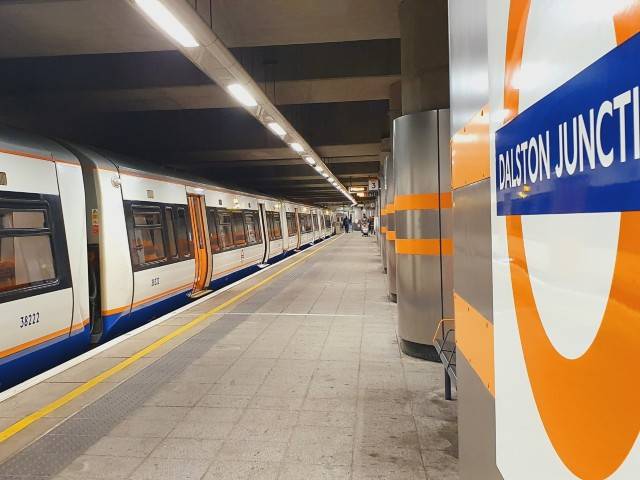
You’ll most likely take the underground train in London during your visit. It’s fast, frequent, and useful.
However, there are two mistakes you want to avoid:
- Taking the tube during rush hour, as it gets very crowded.
- Taking the tube during heat waves, as it gets extremely hot.
What to do
Parts of central London are actually walkable. For example, you can easily walk from Covent Garden to the London Eye in about 20 minutes.
I always check walking distances on Google Maps and if the distance is reasonable, I prefer to walk.
Remember there’s a lot of walking inside stations too, just to reach the platform or the escalators, so you might as well do that walking overground and see more of the city.
During heat waves, the older tube lines are the worst option. The lack of air conditioning makes each ride quite unbearable.
If you can, plan a route using the Overground, the Elizabeth Line, Circle, District, Metropolitan, and Hammersmith & City Line, or the Thameslink. These are all relatively modern and have air conditioning.
Buses don’t have any advantages over the tube during a heat wave, as they have no AC either.
During rush hour, many of them get stuck in traffic or move very slowly.
But buses are a good alternative to the tube if you prefer to see the city outside the bus window (upper deck front seats are the best).